Reviews
Part of Source evaluation guide: mapping claims
Evidence source types compared: firsthand accounts, records, experts and reports
Evidence source types compared by proximity, scope, independence, strengths, limits, and best uses for checking events, numbers, causes, and quotations.
What to take away
- No source type is best for every claim.
- Proximity can improve access while increasing personal or institutional interest.
- Records establish what they record, not every event or motive behind them.
- Experts interpret evidence within a defined field and method.
- Secondary reports can connect evidence, but their original sources still matter.
News stories often fail when a source is asked to prove more than it can know. A witness reports a conclusion about motive. A spreadsheet becomes a complete account of human behavior. An expert comments outside the expert's field. A second article is treated as independent confirmation even though it copied the first.
Choose sources by the claim and combine types where their strengths offset one another's limits.
Quick comparison
Strongest use
- Firsthand account
- What a person saw, heard, did, or experienced
- Original record
- Filed, measured, decided, paid, or recorded fact
- Subject expert
- Method, context, uncertainty, technical interpretation
- Secondary report
- Synthesis, chronology, leads, prior interviews
Main limit
- Firsthand account
- Viewpoint, memory, access, interest
- Original record
- Definitions, omissions, revisions, institutional purpose
- Subject expert
- Scope, conflicts, disagreement
- Secondary report
- Dependence on hidden or repeated sources
Basic check
- Firsthand account
- Location, time, opportunity, consistency
- Original record
- Issuer, version, field meaning, period
- Subject expert
- Relevant work, method, evidence, peers
- Secondary report
- Citations, original reporting, corrections
Firsthand accounts
A participant or observer can provide detail unavailable elsewhere: sequence, language, conditions, and personal experience. Ask where the person was, what senses supplied the information, what happened before and after, whether notes or files exist, and which parts were learned from others.
Do not turn one account into a population claim. Memory can be sincere and incomplete. Trauma, distance, divided attention, translation, and later discussion may affect recall. Compare independent accounts on specific details without pressing people to harmonize their stories.
Original records
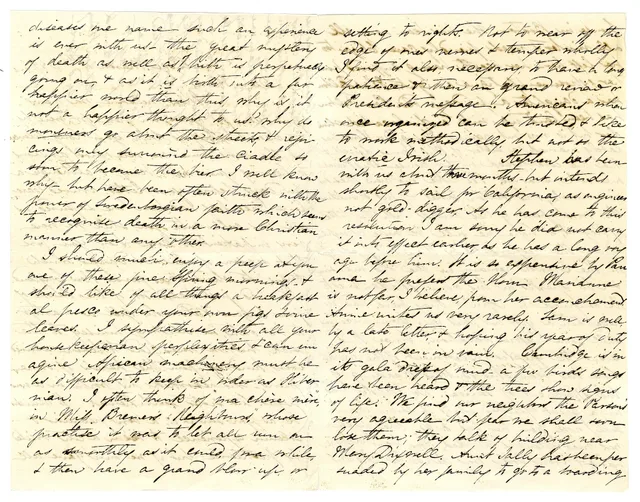
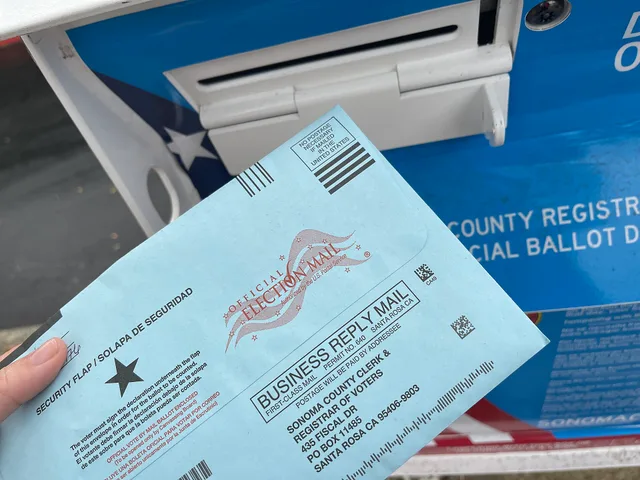
Records include contracts, filings, minutes, logs, datasets, recordings, emails, court documents, inspection reports, and contemporaneous photographs. They can establish precise facts when the reporter understands who created them, for what purpose, under which rules, and at what time.
Cornell University Library's source-evaluation guidance recommends asking critical questions about the appropriateness of a book, article, media item, or website and verifying both the source and the information independently. That distinction matters for records. An authentic memo can contain an unsupported claim, and a genuine spreadsheet can use a misleading category.
Check whether the record is final, amended, partial, redacted, translated, or exported. Read column definitions, footnotes, attachments, and the governing instructions. A filing proves that a party filed a statement. It does not automatically prove the statement true.
Subject experts
An expert can explain what evidence means, identify ordinary practice, test a calculation, or frame uncertainty. Match credentials to the narrow question. A physician is not automatically an epidemiologist; a lawyer may not practice in the relevant jurisdiction; a professor's institutional title does not establish expertise in every topic.
Ask which evidence the expert reviewed, what method supports the view, what could change the conclusion, and where informed disagreement exists. Disclose financial, political, professional, or personal relationships that readers need to judge the comment. Seek a second qualified view when the field is divided or the risk is high.
Secondary reporting and synthesis
A strong report can combine documents, observation, interviews, data, and context. It may also contain the only public account of a source who cannot be reached again. Evaluate the report's byline, date, corrections, evidence access, attribution, and original reporting.
The Digital Inquiry Group's historical thinking chart lays out four reading skills that transfer directly to news evidence: sourcing, contextualization, close reading, and corroboration, each paired with the questions a reader puts to the document and with sentence frames for answering them. The last of the four is what the next paragraph is about.
Two secondary stories are not two confirmations when both point to the same unnamed official, wire copy, press release, or study. Draw the evidence chain. Count independent origins, not URLs.
Match combinations to claims
- Event:direct observation plus recordings, logs, or independent witnesses.
- Number:original data plus definitions, calculations, and a method expert.
- Decision:final record plus interviews about process and consequence.
- Cause:chronology, mechanism, alternatives, comparison, and qualified analysis.
- Quotation:full recording or notes plus speaker identity and context.
The mix changes with availability and risk. State what each source establishes and where the record ends.
Match source combinations to claims
- Eventobservation plus recordings, logs, witnesses
- Numberoriginal data plus definitions and method expert
- Decisionfinal record plus process interviews
- Causechronology, mechanism, alternatives, analysis
- Quotationfull recording plus speaker context
Common questions
Is a witness a primary source?
Yes for the witness's own experience, but not necessarily for events outside that person's access.
Is official data neutral?
Not by default. It reflects definitions, collection choices, coverage, revisions, and institutional purpose.
Can an expert be anonymous?
Sometimes, but readers then lose information needed to judge competence and conflicts. Explain the reason and verify credentials independently.
When is secondary reporting enough?
It may be enough for low-risk context when the reporting is clear and credible. Material contested claims should be traced closer to original evidence whenever possible.