Guides
Source evaluation guide: mapping claims
This source evaluation guide shows how to split compound claims, test evidence by claim type, trace images and records, and judge source authority.
What to take away
- Copy each material assertion into a claim ledger before you search for anything.
- Label the claim type first; a record that settles a date rarely settles a cause.
- Trace summaries, screenshots and quotations back to the earliest surviving record.
- Judge authority against the specific claim, not by title, design or domain.
- Publish a status per claimconfirmed, contradicted, unresolved, not checkable, out of scope.
News verification starts with a sentence, not a website. This source evaluation guide treats each claim separately. A source can be exact about its own filing date and unreliable about a competitor's motives. A witness can know what happened in one room and nothing about why a decision was made elsewhere. Treating a whole source as true or false hides those boundaries.
Photo and credit
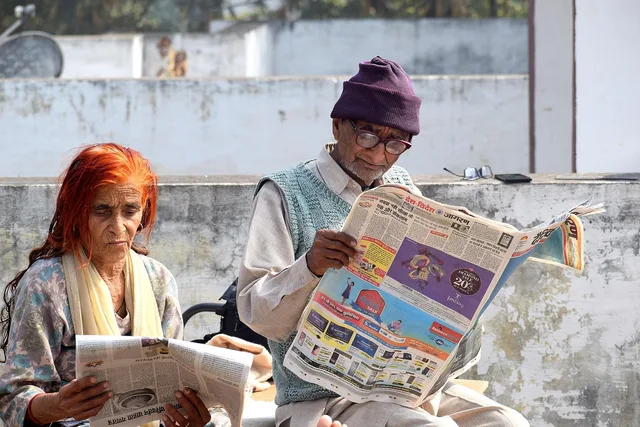
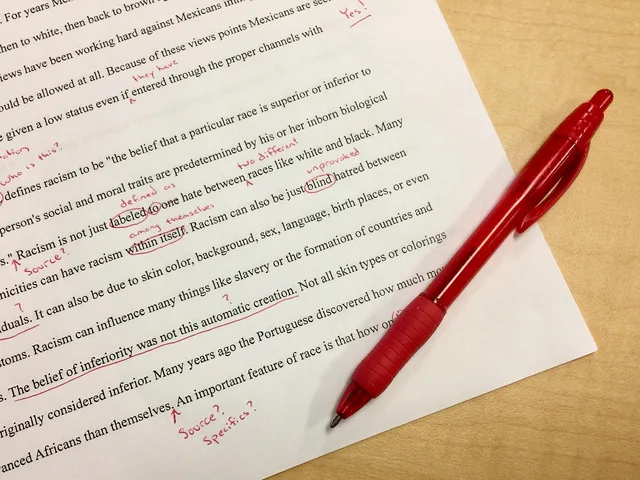
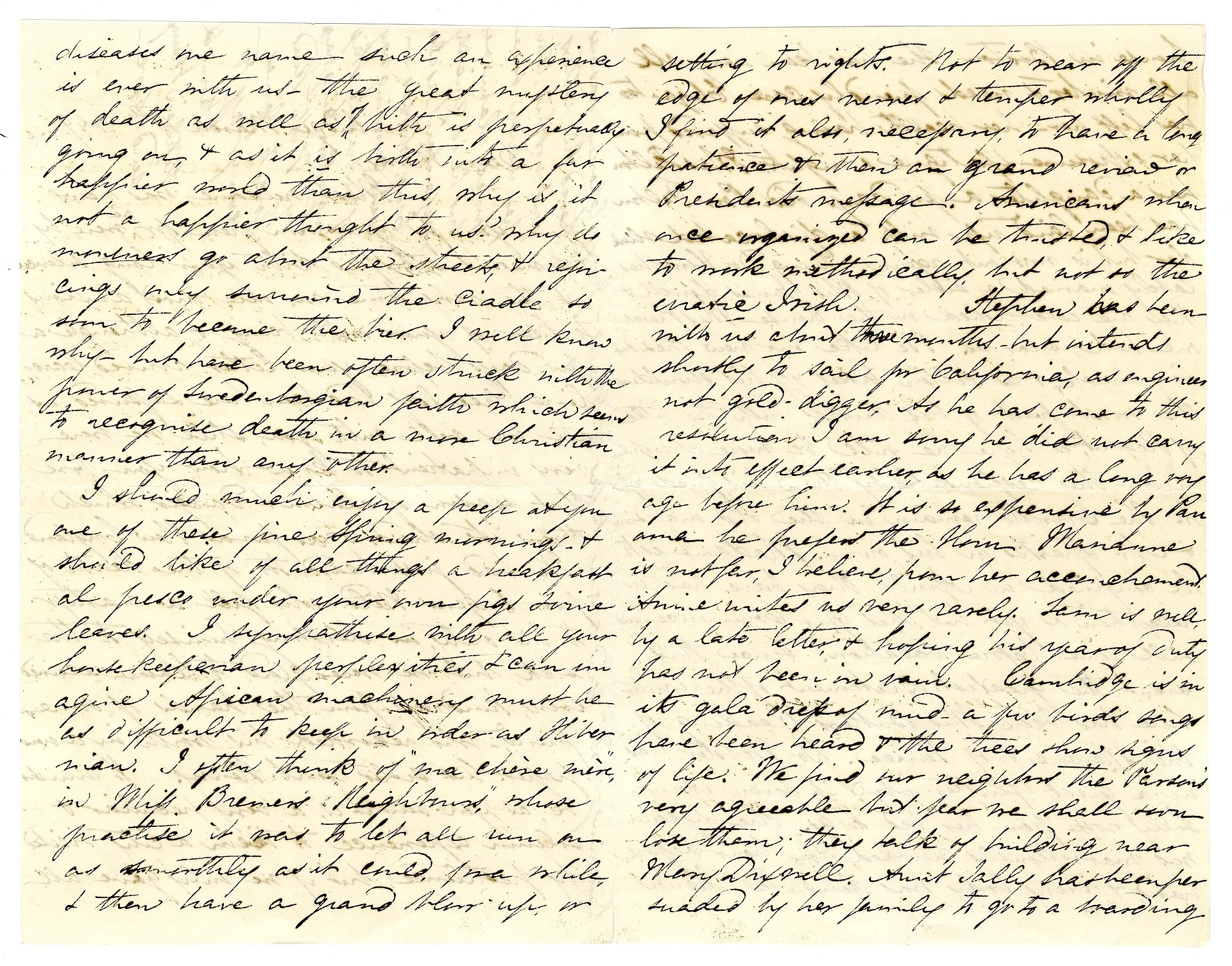
The photograph documents a moment of news consumption. It cannot show whether the printed reports were accurate or how the readers understood them. To check the image, search it with Google Lens or TinEye, compare matches and dates, then inspect the earliest available publisher page and its caption and credit. An earlier match is a lead, not proof; confirm that the image depicts the stated place, event, and date.
Turn the story into claims
Copy each material assertion into a claim ledger. Split compound sentences. "The city approved a $3 million contract on Tuesday after receiving one bid" carries at least four claims: who decided, the amount, the date, and how many bids arrived. Each may need a different record.
For this example, map each part to the record that could test it:
Claim / Evidence to seek
- The city approved the contract
- Meeting minutes or an award resolution
- The contract was for $3 million
- The executed contract or award notice
- Approval happened on Tuesday
- Dated meeting minutes or a procurement record
- The city received one bid
- A bid tabulation or procurement file
These are records to check, not findings about the example. A record that supports one row does not establish the others.
Label the claim type before you search.
| Type | What can test it |
|---|
Claim types and tests
- Eventobservation, recording, timestamped record
- Identityofficial record, confirmation, directory
- Numberdataset, filing, calculation, method
- Causetiming, mechanism, alternatives, attribution
- Quotationrecording, transcript, contemporaneous notes
- Opinionaccurate attribution, not truth rating
- Predictionnamed assumptions, clear future condition
Use these claim types as a starting point:
| Type | What can test it |
|---|---|
| Event or action | Meeting minutes, an official decision, contemporaneous records, or independent witnesses |
| Date or time | Dated records, logs, or contemporaneous reporting |
| Amount or quantity | Contracts, invoices, bid records, or the underlying dataset |
| Attribution or quotation | A recording, transcript, original document, or the speaker's direct statement |
| Cause or intent | Multiple independent evidence lines and records bearing on the decision; a single outcome rarely establishes motive |
The label stops a document that proves one detail from being cited as support for the whole sentence.
Find the evidence chain
Search the distinctive wording, the document title, the docket number, the image caption, and the quoted figure. When an article cites another article, keep walking toward the interview, filing, dataset or speech underneath it. Keep every layer. The path often shows where a number changed units or a quotation lost a condition.
Trace the evidence chain
- Search distinctive wording and document title
- Check docket number, caption, quoted figure
- Walk toward interview, filing, dataset, speech
- Keep every layer of the chain
- Record creator, publisher, date, version
- Note purpose, method, audience, access, conflict
- Ask whether confirmations are independent
For each source, record these details:
- creator
- publisher
- date
- version
- purpose
- method Note the audience, the access route, any conflict, and the claim it is meant to support. Then ask whether two apparent confirmations are independent. Ten pages repeating one press release still add up to one evidence chain.
Judge fit, authority, and independence
Authority depends on the claim. A regulator can establish what it filed or enforced. A researcher can explain a method inside that researcher's field. A participant can describe a personal experience. None of them automatically proves a broader causal claim.
Authority depends on the claim
Regulator
- Can establish
- what it filed or enforced
- Cannot prove
- broader causal claim
- Check next
- funding, omissions, corrections
Researcher
- Can establish
- method inside their field
- Cannot prove
- broader causal claim
- Check next
- funding, omissions, corrections
Participant
- Can establish
- personal experience
- Cannot prove
- broader causal claim
- Check next
- funding, omissions, corrections
The UNESCO Journalism, 'Fake News' & Disinformation: Handbook for Journalism Education and Training (2018), edited by Cherilyn Ireton and Julie Posetti, presents a curriculum covering information disorder, fact-checking, social verification, and journalism practice. It also explains why misinformation and disinformation are more precise terms than "fake news" for every false or disputed statement. Intent is a separate claim and needs its own evidence.
Check who funded or commissioned the information, who collected it, and what was left out. Check whether the publisher can correct it. Independence does not mean a source has no interests. It means you can name those interests, test the evidence, and confirm beyond the same chain.
A named method for checking a source is SIFT: Stop, Investigate the source, Find better coverage, and Trace claims, quotes, and media to their original context. Investigating a source can include lateral reading: leave its page and see what other reliable sources say about it.
The .gov domain is administered by the Cybersecurity and Infrastructure Security Agency (CISA) through its DotGov Program under the DOTGOV Online Trust in Government Act of 2020. The program's requirements for operating a .gov domain bar commercial use, political campaign use, and illegal content.
CISA's DotGov Program states that it does not generally review or audit how government organizations use the domains they hold.
The address establishes who the operator is, not that any particular page is sound.
Write only what the evidence earns
Give every claim a status: confirmed, contradicted, unresolved, not checkable, or out of scope. A precise unresolved finding beats a guess. When records disagree, name the records, the dates, the definitions, and the response from the responsible party.
Read the headline, deck, captions, chart labels, alerts and social copy against the ledger before publication. Promotional text is where limits get dropped. Save the final evidence set with the access date so a later correction can be reconstructed.
Common questions
Is a primary source always best?
No. It may sit closest to the event and still be incomplete, self-interested, misunderstood or altered. A primary source needs context and corroboration like any other.
Do two sources confirm a claim?
Only when both supply relevant evidence and neither merely repeats the same origin. Two outlets quoting one press release are one source wearing two mastheads.
Can opinion be fact-checked?
The judgment itself usually cannot. Its quotation, its attribution, its stated basis, and any factual claim embedded inside it can all be checked.
What if no source settles the point?
Report the limit. Say what was checked, what conflicts, and what stays unknown. That is a finding, not a failure.
In this guide
- How to verify an online source: a frameworkUse this framework to verify an online source: identify its publisher, read laterally, trace key evidence, and record what remains unresolved.
- Evidence source types compared: firsthand accounts, records, experts and reportsEvidence source types compared by proximity, scope, independence, strengths, limits, and best uses for checking events, numbers, causes, and quotations.
- Source and claim verification checklist for reportersSource and claim verification checklist for scope, origin, authority, evidence, independence, quotations, numbers, conflicts, response, wording, and corrections.
- 8 Source Evaluation Mistakes That Distort a Fact-CheckEight source evaluation mistakes can distort a fact-check, from outlet ratings and copy-counting to false certainty. Learn the warning signs and fixes.
- Fictional case: correcting a circular citation that became a factCircular citation correction case showing how one unsupported claim spread across reports, passed weak checks, and required a transparent article-wide repair.