Rules
Is That ATIP Response Real? How to Verify Access to Information Records
Learn how to verify access to information request records from Canadian federal and provincial portals. Check release letters, exemptions, and file numbers.
What to take away
- A genuine federal ATIP response includes a release letter signed by an ATIP coordinator, with a file number and the date.
- Check the official federal portal or provincial freedom of information office before quoting any leaked record.
- Exemptions must cite a specific section of the Access to Information Act or a provincial act.
- If the file has no page numbers, no release letter, or no statutory exemption, treat it as unverified.
- A complaint to the Office of the Information Commissioner of Canada is the formal consequence when an institution fails to comply.
A leaked ATIP file can look official on a screenshot, but authenticity depends on details that are easy to check.
Federal jurisdiction for ATIP
Most federal institutions fall under the Access to Information Act, which gives the public a right to records held by government bodies. The Treasury Board Secretariat explains the process on its access to information and privacy page. The law itself sets time limits and exemptions in the Access to Information Act. Some Crown corporations and business-related institutions have partial coverage under the Act. Provincial and municipal records fall under provincial freedom of information laws instead. A separate guide covers how to find and request public records, step by step.
What a compliant ATIP disclosure contains
A compliant federal ATIP package should include the records, a release letter, and an index of exemptions. Each exempted passage must cite the section of the Access to Information Act used to withhold it. For example, a blank page will say "19(1)" for personal information or "21(1)(a)" for advice to government.
Page numbers on every sheet are another sign. The package should also show the requester's file number and the date of release. A genuine release letter may include a note about the requester's right to complain to the Office of the Information Commissioner. Without those elements, a document may be a partial leak or an edited fake. Our guide to public document types and statuses explains how to tell an official release from a draft.
Records to keep after a request
If you are the requester, keep the original email, the portal confirmation, and the release letter. If you received a leaked file, ask for the full package, not just a single page. The file number is the most useful detail for verification. Keep a note of the ATIP office contact name from the release letter. That name helps if you later need to verify a copy. Government records and public documents verification guide lists the details that make a record usable.
What happens if an institution does not comply
When a federal institution misses the 30-day deadline, refuses access without a valid exemption, or fails to cite the Act, you can complain to the Office of the Information Commissioner of Canada. The Commissioner can investigate, issue recommendations, and refer the matter to the Federal Court. The Commissioner may also issue a report that names the institution. A complaint is a concrete consequence, not just a threat.
Provincial differences in freedom of information
Each province has its own law, portal, and oversight body. The table below shows four examples. Federal records are checked through the ATIP portal, while provincial records go through provincial freedom of information offices.
| Jurisdiction | Governing law | Official portal or office | Oversight body |
|---|---|---|---|
| Federal | Access to Information Act | ATIP Online Request Service on canada.ca | Office of the Information Commissioner of Canada |
| British Columbia | Freedom of Information and Protection of Privacy Act | FOI request page on gov.bc.ca | Office of the Information and Privacy Commissioner for British Columbia |
| Ontario | Freedom of Information and Protection of Privacy Act | Freedom of Information request page on ontario.ca | Information and Privacy Commissioner of Ontario |
| Quebec | Access to documents held by public bodies and the protection of personal information | Access to information request page on quebec.ca | Commission d'accès à l'information du Québec |
A provincial FOI response should name the provincial act, such as British Columbia's Freedom of Information and Protection of Privacy Act, and cite the relevant section. Check the province's freedom of information office if you hold a leaked page from a municipal or provincial body. Some provincial laws cover municipalities and universities directly, while others have separate access rules for police or health records. US state rules differ, but the same verification logic applies, as described in state public records compared.
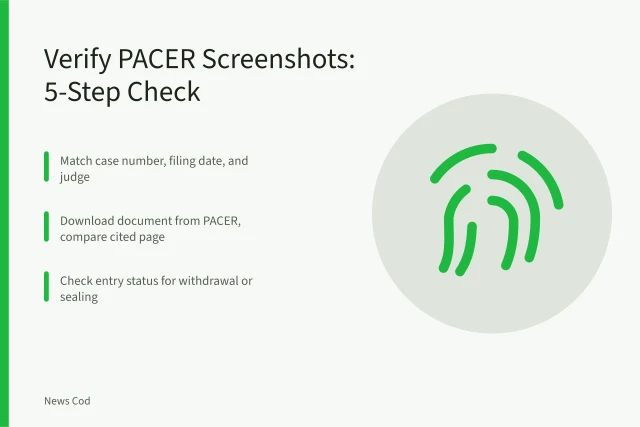
Five verification steps
A genuine ATIP release letter is the single most reliable marker of an authentic federal response.
- Check the file number against the federal ATIP portal or provincial freedom of information office. Requesters can confirm whether that package was released.
- Look for a release letter signed by an ATIP coordinator. The letter should state the Act and list every exemption applied.
- Match page numbers and exemption codes. Federal exemptions cite specific sections of the Access to Information Act, such as 19(1) or 21(1)(a).
- Ask the requester for the original email or portal download notification. A screenshot alone is not enough.
- Contact the institution's ATIP office directly and quote the file number. A real office can verify the package.
These checks work the same way for provincial records, with the province's law in place of the Access to Information Act.
Common questions
Can I verify a provincial FOI response the same way? Yes. Each province has its own freedom of information law and oversight body. You still need the release letter, file number, and exemption citations.
What if the leaked file has no release letter? Treat it as unverified. Ask the source for the full package or contact the institution's ATIP office with the file number.
Who investigates a federal ATIP complaint? The Office of the Information Commissioner of Canada. The Commissioner can investigate delay, missing records, and improper exemptions.
Does a federal ATIP response ever contain unsourced pages? No. A compliant disclosure will cite the Act for each withheld passage and include page numbers on the records released.