Maintenance
Part of Government records and public documents verification guide
Public document verification checklist before you quote it
Public document checklist for provenance, identity, type, status, version, completeness, authenticity, context, redactions, calculations, citation, and review.
What to take away
- Record the official system, identifier, document type, dates, version, and procedural status.
- Verify that the copy is complete and has not been superseded.
- Read attachments, nearby docket entries, metadata, and finding aids.
- Attribute allegations, testimony, recommendations, findings, and orders to the correct speaker.
- Preserve a reproducible citation and source packet.
Use this checklist for court records, legislative documents, rules, public filings, meeting materials, reports, data exports, and archival sources. Add reviewer names, results, and evidence paths. Adapt legal terminology to the jurisdiction and record system.
Source and identity
- Issuing body, creating office, custodian, and repository identified
- Official database or archive used for confirmation
- Case, docket, bill, filing, accession, contract, or agenda identifier recorded
- Full title and exact document type copied
- Filed, signed, published, adopted, effective, and retrieved dates distinguished
- Stable URL, citation, and local filename saved
- Search query and filters preserved for database results
Status and authority
- Draft, proposal, recommendation, final action, and current law distinguished
- Introduced, passed, enacted, approved, signed, effective, and enforced distinguished
- Allegation, evidence, finding, holding, order, and judgment distinguished
- Issuer had authority for the action attributed to it
- Stay, appeal, amendment, withdrawal, vacatur, expiration, or supersession checked
- Jurisdiction and applicable date match the story
Version and completeness
- Original, corrected, amended, and restated versions compared
- Page count and sequence checked
- Attachments, schedules, exhibits, appendices, and referenced records located
- Signatures, seals, certification, or filing stamps examined
- Blank pages, missing files, broken links, and truncated exports investigated
- Native file retained when structure or metadata matters
- Original preserved separately from annotated working copies
Digital authenticity
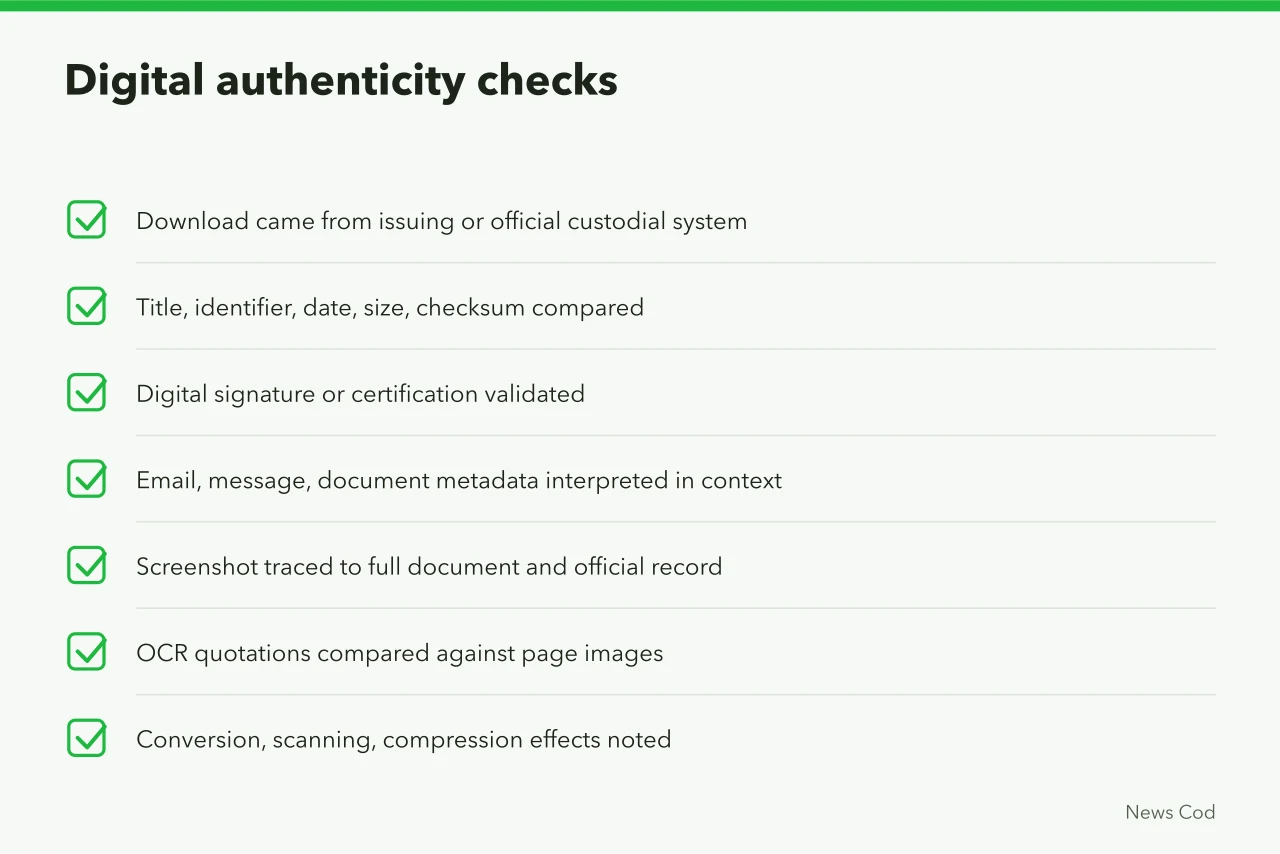
- Download came from the issuing or official custodial system
- Title, identifier, date, size, and checksum compared where risk warrants
- Digital signature or certification validated with appropriate software
- Email, message, or document metadata interpreted in system context
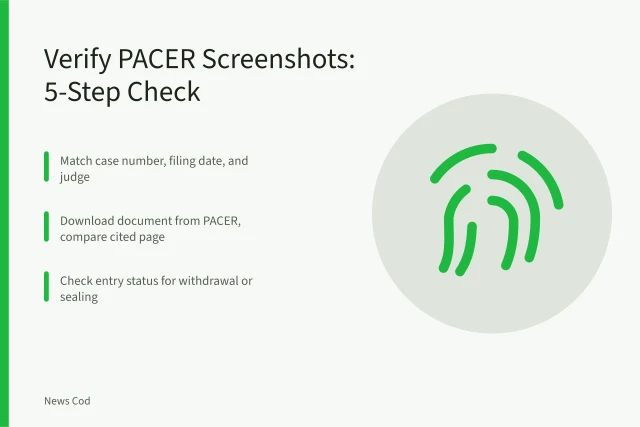
- Screenshot traced to the full document and official record
- OCR quotations compared against page images
- Conversion, scanning, and compression effects noted
The Government Printing Office's overview of its authentication program defines what a certified file claims. Authentic content is what the office verified as complete and unaltered against the originator's approved version.
Official content is what the government published at its own expense or as required by law. The program exists because electronic documents can be altered easily enough to circulate unauthorized versions.
Certification answers a narrow but important question about the issued file. It does not establish that a quoted witness, filer, commenter, or agency source was factually correct. Record the certificate result separately from the content assessment.
If certification fails, download the document again from the official system, check validation method and software, compare identifiers and file properties, and contact the repository before alleging alteration. Preserve both copies when they differ.
For unsigned material, reconstruct provenance through the official record page, identifiers, surrounding entries, metadata, and custody. Compare with other official copies and state which signals were available and which were absent.
Record hierarchy and context
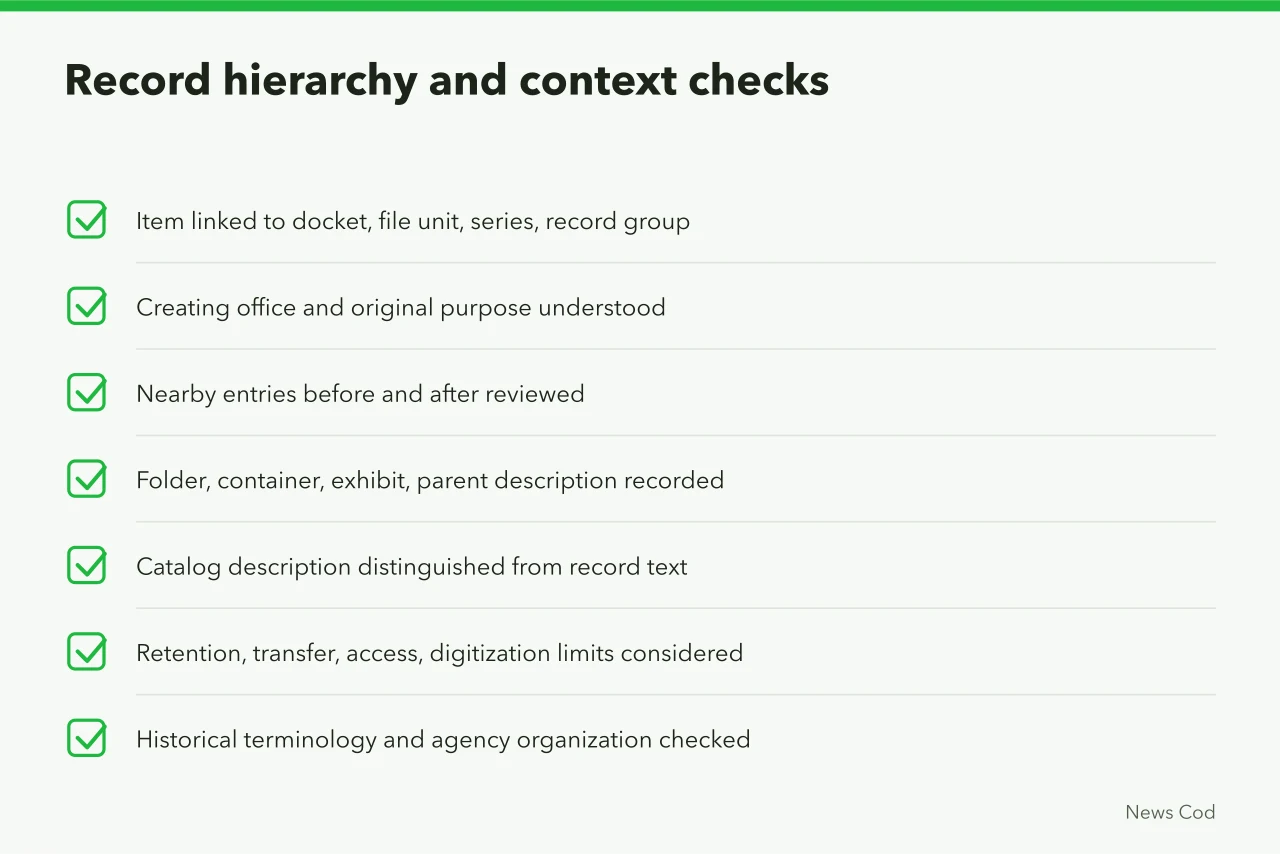
- Item linked to its docket, file unit, series, record group, meeting, or proceeding
- Creating office and original purpose understood
- Nearby entries before and after the document reviewed
- Folder, container, exhibit, or parent description recorded
- Catalog description distinguished from underlying record text
- Retention, transfer, access, and digitization limits considered
- Historical terminology and agency organization checked for the relevant period
National Archives guidance on finding-aid requirements shows why folder lists, documentation, metadata, format details, context, and container information matter to retrieval and interpretation. A lone item can lose the arrangement that explains who created it and how it fits the surrounding series.
Speaker and evidentiary role
- Every material statement attributed to its author or institutional actor
- Party allegation not called a court finding
- Staff recommendation not called adopted policy
- Public comment not called an agency conclusion
- Regulated entity's filing not called regulator verification
- Witness statement, expert report, audit finding, and adjudicated fact distinguished
- Consequential claims corroborated through independently created evidence where possible
Redactions, exemptions, and gaps
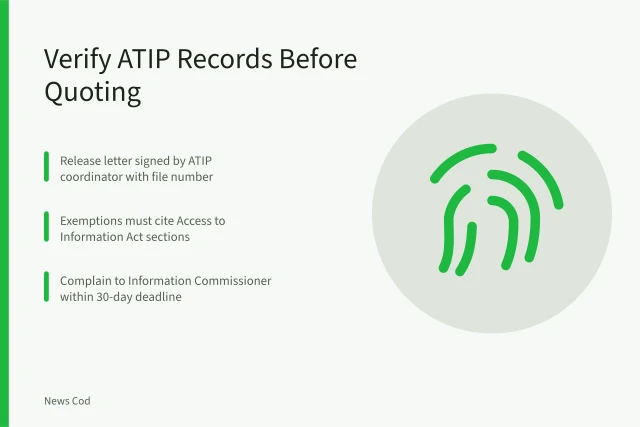
- Response letter and withholding codes retained
- Full withholding distinguished from redaction and no-records response
- Page numbering, deletion sheets, and referred records reconciled
- Search custodians, systems, terms, and date range examined
- Missing attachment or sequence gap queried
- Privacy and legal restrictions considered before republication
- Gap described without asserting motive unsupported by the record
Numbers and data
- Unit, period, population, and status defined
- Requested, budgeted, authorized, obligated, paid, and estimated amounts distinguished
- Totals, percentages, and rates reproduced
- Amendments, restatements, and revisions applied
- Footnotes, suppressed values, negative entries, and duplicates checked
- Fiscal and calendar years distinguished
- Database snapshot time included for changing data
Citation and publication
- Claim linked to the page, section, entry, exhibit, or field that supports it
- Issuer, title, identifier, date, and pinpoint included
- Headline verb matches procedural status
- Document quote retains qualifying context
- Response from affected parties sought on material interpretation
- Sensitive personal information minimized or redacted under editorial policy
- Correction plan covers data, graphics, downloads, and social distribution
Common questions
Is an official digital signature required for authenticity?
No. It is one strong integrity signal. Provenance can also be established through an official system, identifiers, metadata, custody, and comparison.
Should a reporter cite a catalog page or the item?
Cite the item for its content and the catalog or finding aid when it supports provenance, arrangement, or scope.
Does a missing attachment invalidate the whole record?
Not necessarily. It limits what can be concluded. Locate the attachment or narrow the claim.
Can a filed PDF be current but not operative?
Yes. It may be a proposal, stayed order, superseded version, or filing awaiting decision. Check status and later entries.