Features
Part of How newsrooms verify breaking news and crisis claims with an incident ledger and five tracks
Fictional case: correcting a crisis casualty count
Casualty count correction case showing how a newsroom fixes a merged disaster toll, updates every channel, explains source overlap, and changes its workflow.
What to take away
- This fictional training case does not describe a real town, flood, agency, or victim.
- The newsroom added overlapping hospital and emergency-service figures.
- "Casualty" obscured the difference between transported, treated, admitted, missing, and dead.
- The correction reaches mobile, web, social, broadcast, and syndication audiences.
- A new reconciliation table prevents totals until identity and category overlap are checked.
The fictional report
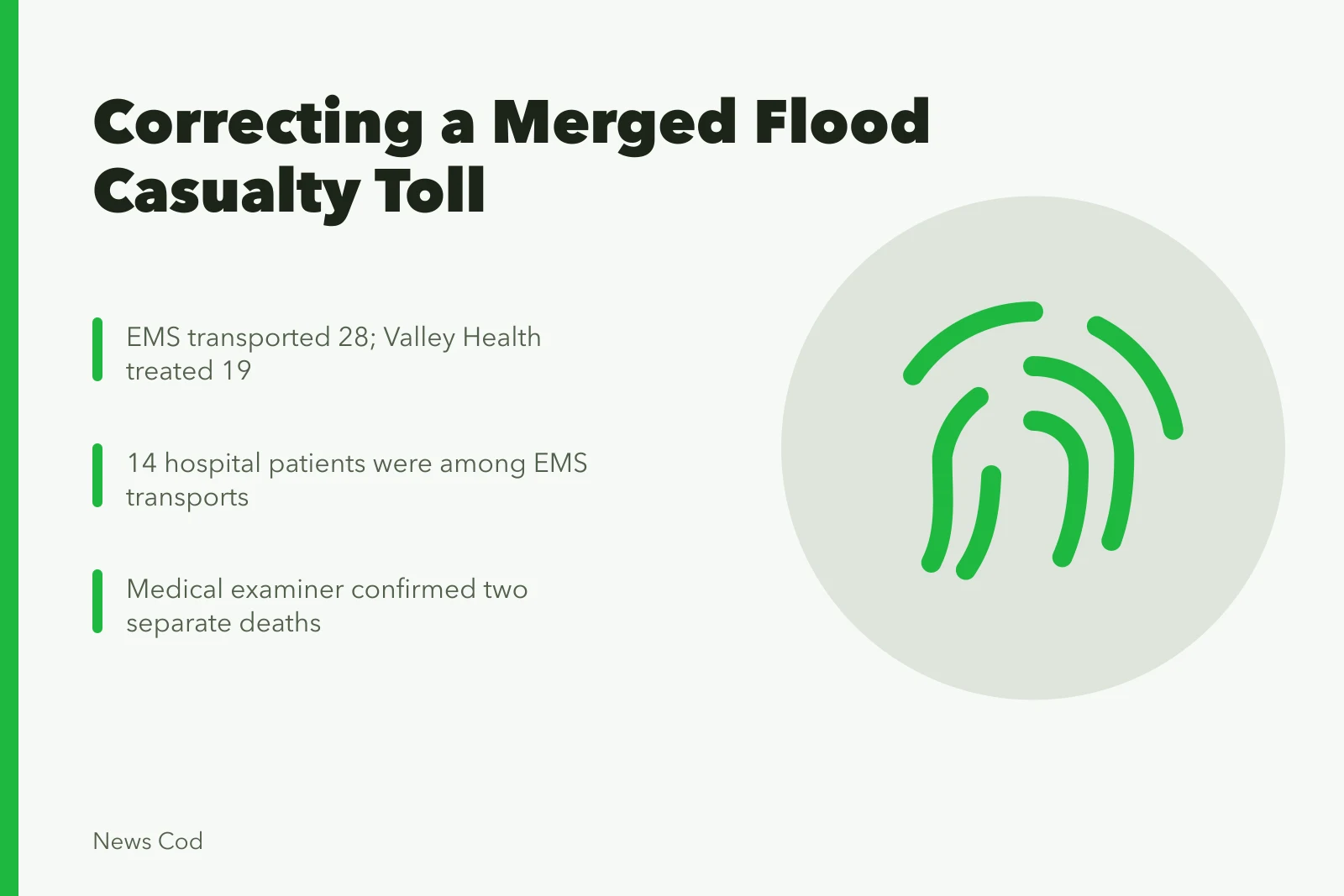
After severe flooding in the fictional town of East Junction, county emergency medical services says at a 4 p.m. briefing that crews transported 28 people to area hospitals. At 4:12, Valley Health says its two hospitals treated 19 flood-related patients, including 14 who arrived by ambulance and five who arrived on their own.
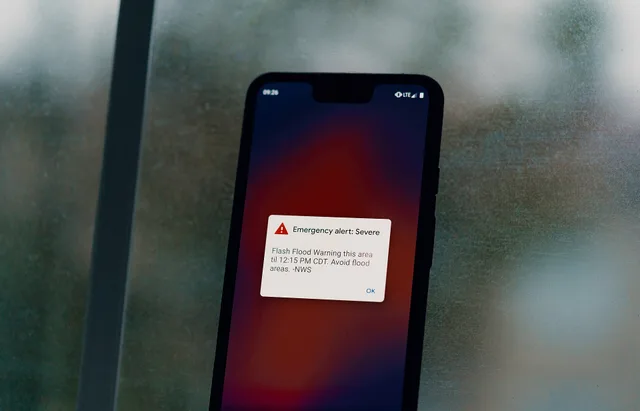
At 4:18, a reporter writes that "47 people were casualties of the flood." A mobile alert shortens that to "Flood leaves 47 casualties." Radio hosts read the number as injuries. Social users interpret it as deaths.
At 4:31, the county medical examiner says two deaths are confirmed. At 4:38, Valley Health explains that 14 of its 19 patients were included in the EMS transport figure. The newsroom's claimed total counted those patients twice and merged deaths with treatment categories.
The immediate correction
The newsroom should send this by 4:45:
Correction: Our earlier alert wrongly said 47 people were casualties of the East Junction flood. County EMS transported 28 people to area hospitals as of 4 p.m. Valley Health treated 19 patients, but 14 of them were among those transports, so the figures cannot be added. The county medical examiner has separately confirmed two deaths. We regret the error.
This language names the wrong figure, explains the overlap, gives the correct available categories, and avoids claiming a unique injury total that has not been reconciled.
How the error happened
The reporter treated each institutional number as a separate population. No table recorded category, time, source, or overlap. "Casualty" then blurred injury and death, making the headline more alarming than the underlying source statements.
The editor checked that both organizations existed and had issued the figures. That was source authentication, not numerical reconciliation. A second official source can report the same people from another point in the response chain.
Build the corrected number table
Corrected number table
| Source | Time represented | Category | Reported count | Known overlap | Publishable wording |
|---|---|---|---|---|---|
| County EMS | 4:00 p.m. | People transported | 28 | Includes 14 Valley Health patients | "EMS transported 28" |
| Valley Health | 4:12 p.m. | People treated | 19 | 14 arrived through EMS | "Valley Health treated 19" |
| Medical examiner | 4:31 p.m. | Confirmed deaths | 2 | Separate status; transport history under review | "Medical examiner confirmed two deaths" |
| County reunification center | 4:35 p.m. | Unresolved family inquiries | 11 | Not a missing-person count | Do not label as missing |
The table does not calculate 33 unique injured people because hospital transfers, treatment at other facilities, and the status of the two deceased people remain unresolved.
Corrected Number Table
Source
- County EMS
- 4:00 p.m.
- Valley Health
- 4:12 p.m.
- Medical examiner
- 4:31 p.m.
- Reunification center
- 4:35 p.m.
Time
- County EMS
- Transported
- Valley Health
- Treated
- Medical examiner
- Confirmed deaths
- Reunification center
- Unresolved inquiries
Category
- County EMS
- 28
- Valley Health
- 19
- Medical examiner
- 2
- Reunification center
- 11
Count
- County EMS
- Valley Health
- Medical examiner
- Reunification center
Why disaster death figures need their own authority
Deaths connected with disasters can be direct or indirect, and formal mortality records depend on medical-examiner, coroner, physician, public-health, and vital-record processes. A newsroom should not build an official death toll from visual counts, family posts, hospital rumors, or unresolved missing lists.
CDC's overview of public-health surveillance during disasters describes mortality surveillance as systematic collection, analysis, and interpretation of death data, with guidance for certification and tracking. It also treats injury and illness surveillance as a separate category.
For live reporting, this means attributing the currently confirmed toll to the responsible local authority and allowing for later public-health reconciliation.
Correct every distribution path
The managing editor assigns a channel audit:
| Channel | Error | Repair | Confirmation |
|---|
Channel Correction Audit
- Mobile alertsend explicit correction
- Web headlinereplace and add top note
- Live blogstrike through with explanation
- Radioread correction twice
- Socialcorrect in new post and reply
- Syndicationtransmit correction notice
Deleting the original social post without a replacement would leave screenshots and third-party copies unexplained. The correction should be at least as clear and visible as the mistake.
Handle names and family notification
At 5:20, a volunteer texts the names of two people believed dead. The newsroom does not publish them. It asks the medical examiner whether identification and family notification are complete.
The NTSB's Federal Family Assistance Framework for Aviation Disasters notes that death notification cannot occur until a fatality has been identified and that chaotic patient admissions can delay identification. Although this fictional flood is not an aviation event, the distinction between possible involvement, identification, and notification is a sound reporting safeguard.
The editor's note
The final note reads:
Editor's note: An earlier version incorrectly reported 47 casualties by adding a county EMS transport figure to a hospital treatment figure. Fourteen people appeared in both counts, and the term "casualties" wrongly blurred injuries and deaths. We corrected the headline, article, mobile alert, social posts, broadcast script, and partner feed beginning at 4:45 p.m. The medical examiner had confirmed two deaths as of 4:31 p.m.; authorities had not released a reconciled unique injury total.
Workflow changes
The newsroom adopts five rules:
- Every live number includes source, category, jurisdiction, cutoff time, and status.
- Figures from response stages are not added until identities and transfers are reconciled.
- "Casualty" is not used in alerts when injury and death categories can be named.
- Deaths require confirmation from the legally responsible local authority.
- A second editor reviews every high-impact numerical alert and its denominator.
The postmortem also checks whether headline length, staffing, briefing notes, or alert templates pushed the desk toward vague wording.
Common questions
Why not report 33 injured after subtracting the known overlap?
Because the records do not yet establish unique patients across all facilities, transfers, and outcomes. Subtraction alone does not complete reconciliation.
Does "casualty" always mean death?
No. Readers use it inconsistently. Name dead, injured, missing, transported, or treated categories directly.
Can family posts confirm a death?
They may provide important testimony, but verify identity, relationship, and official status. Consider notification and privacy before naming anyone.
Is a changed official toll a newsroom correction?
Not if the earlier figure was accurately attributed and labeled preliminary. Mark it as an update. Use a correction when the newsroom reported the source or figure wrongly.