Guides
How to Verify a Statistics Canada Labour Force Survey Claim
Verify Statistics Canada claim numbers against LFS data, The Daily and provincial labour statistics, and see what a $0 to $400 yearly checking budget buys.
What to take away
- The free path works: Statistics Canada's own LFS pages, The Daily releases and the data tables settle most claims at no cost in CAD.
- A modest paid path, roughly $0 to $400 a year, buys faster access, saved extracts and a second pair of eyes.
- One-off costs are a spreadsheet licence and a short training course. Recurring costs are subscriptions and your own time.
- Most budgets leak through unstated staff hours, not through tool prices.
- Provincial comparisons fail more often from definition mismatches than from bad arithmetic.
What the range covers
A verification habit for labour claims is cheap because the primary source is public. Statistics Canada publishes the Labour Force Survey methodology, the monthly The Daily release and the underlying tables at no charge. What you pay for is speed, storage and review.
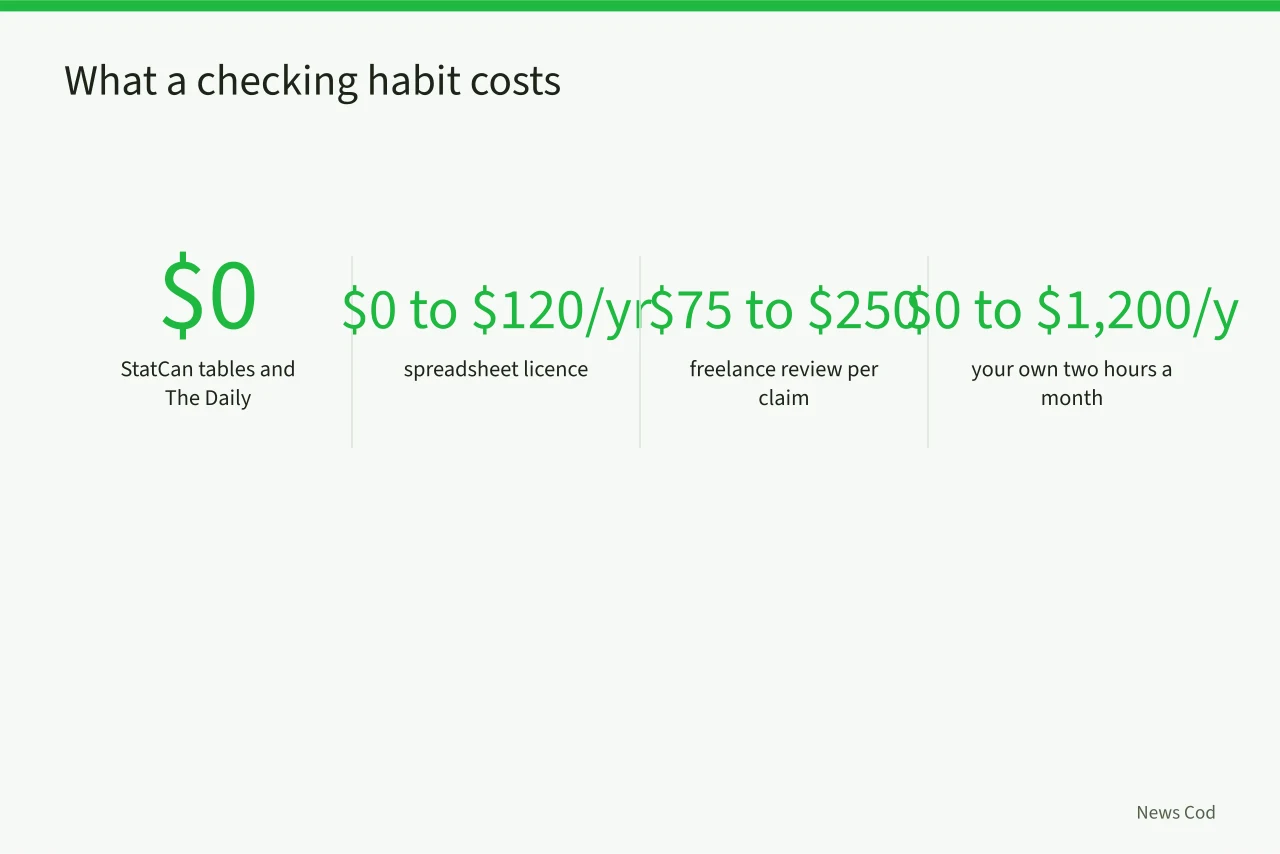
The figures below are illustrative monthly and annual ranges in CAD, drawn from typical consumer software pricing and standard freelance rates in Canada. They are not quotes from any vendor.
| Cost line | Type | Low to high (CAD) |
|---|---|---|
| Statistics Canada data tables and The Daily | Recurring | $0 to $0 |
| Spreadsheet or office suite licence | One-off or recurring | $0 to $120 per year |
| Data extract or API tier | Recurring | $0 to $180 per year |
| Short course in statistics or data literacy | One-off | $0 to $400 |
| Freelance review of one claim | Recurring per use | $75 to $250 |
| Your own time, two hours a month | Recurring | $0 to $1,200 per year in opportunity cost |
The last row is the one people leave out. Time is a real line item even when no invoice arrives.
Start with the survey definition page for the Labour Force Survey, because it explains coverage, definitions and collection methods before any number is quoted.
Line by line
Access to the numbers is free. The Statistics Canada start page leads to the Labour Force Survey tables and the monthly release, and the survey methodology page sets out definitions, coverage and collection methods for the LFS itself.
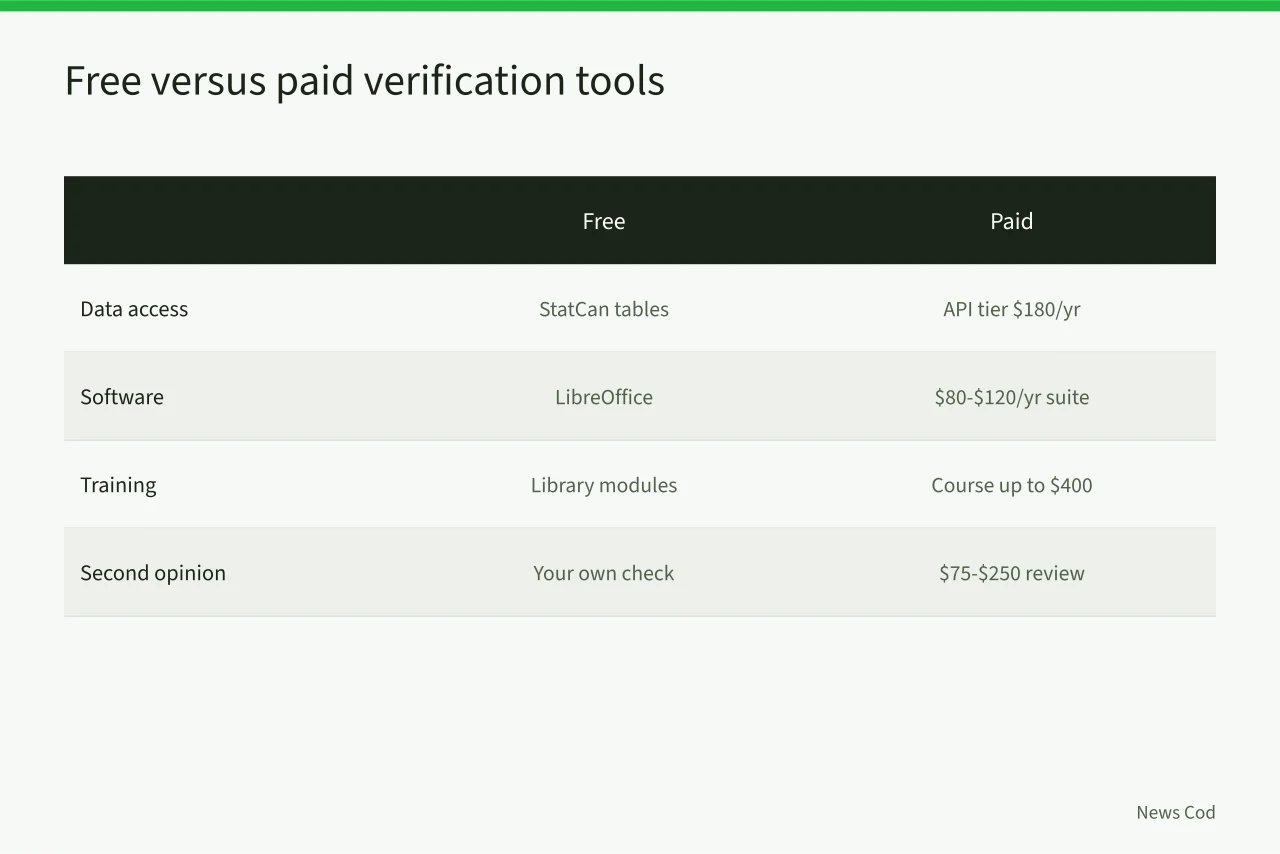
A spreadsheet licence is optional. LibreOffice costs nothing and handles the table formats Statistics Canada publishes. A paid suite runs about $80 to $120 a year in Canada for a single user.
An API or bulk extract tier matters only if you check numbers weekly. For occasional work, manual downloads are fine and cost nothing.
Training is a one-off. A community college course or an online data literacy module typically runs $0 to $400. Many public libraries in Canada offer free access to similar material.
Freelance review is the paid second opinion. A data analyst charging $75 to $250 for a single claim review is reasonable for a story that will be published.
Fixed against variable
Fixed costs repeat whether or not you publish. A spreadsheet licence and a course are fixed once purchased; a subscription renews each year.
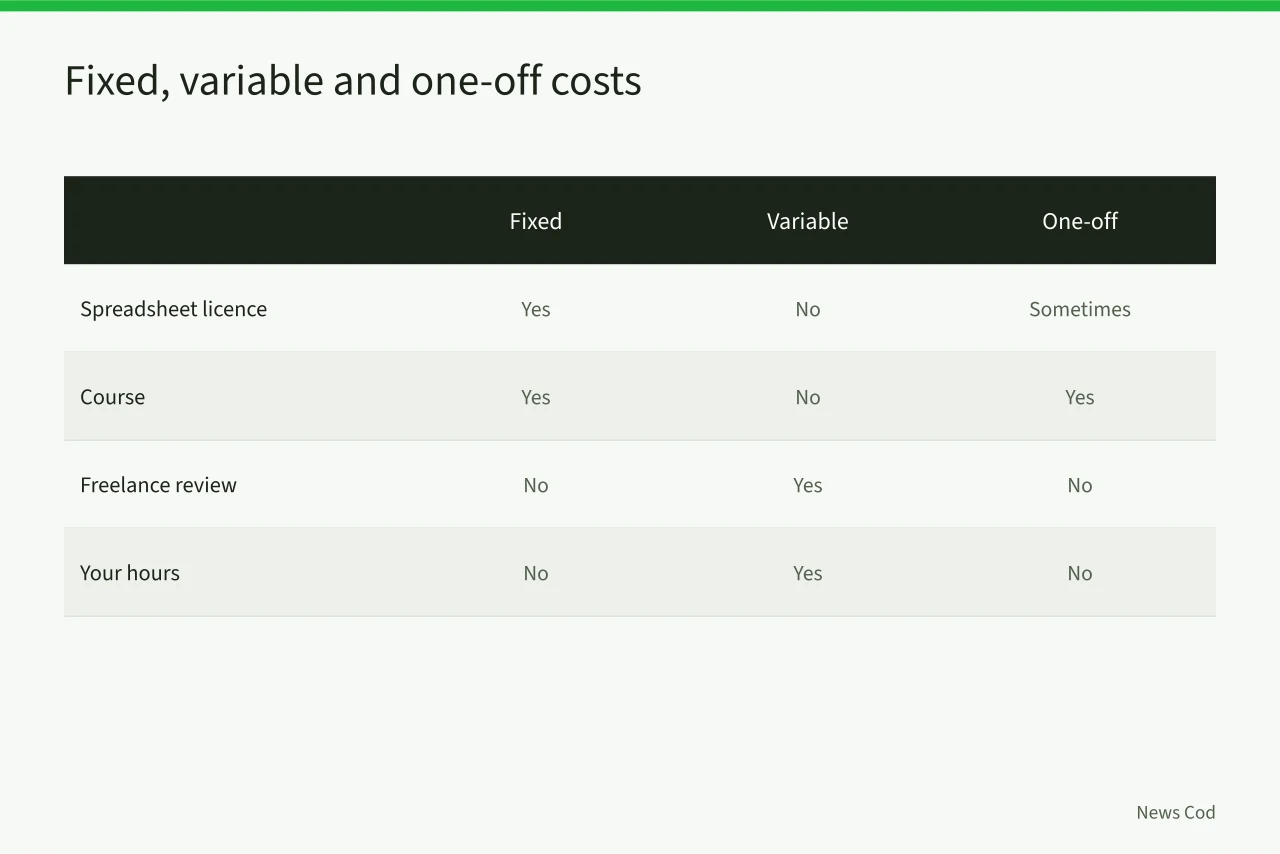
Variable costs scale with the work. Freelance reviews and your own hours rise with the number of claims you check. A quiet month costs almost nothing.
One-off items are the licence and the course. Recurring items are subscriptions, review fees and time. Separate them before you promise a newsroom a monthly figure.
A practical split for a small desk: keep recurring spend under $200 a year and treat reviews as a per-story cost.
Example: checking a provincial wage claim
A claim says average weekly earnings in one province jumped after a policy change. The free path takes about an hour.
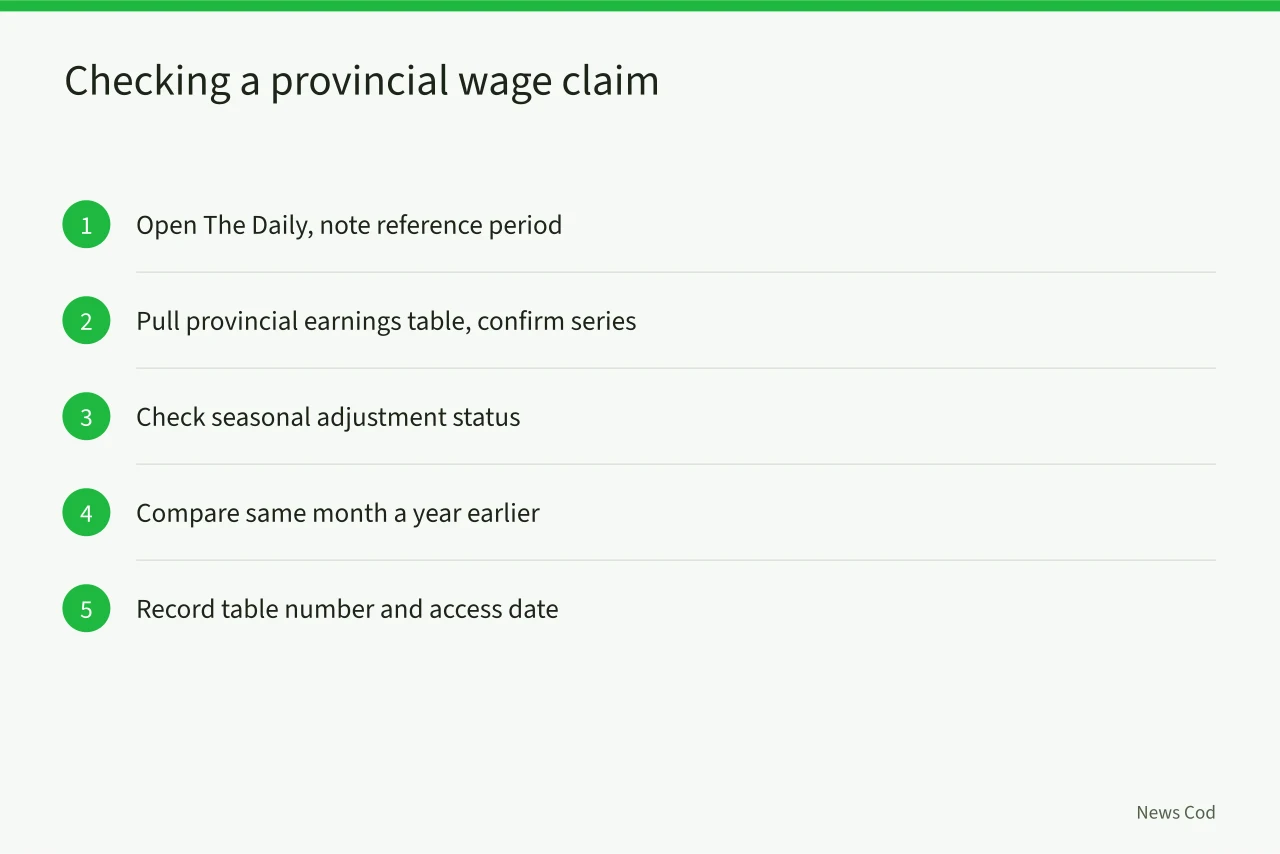
- Open The Daily release for the month cited and note the reference period.
- Pull the provincial table for average weekly earnings and confirm the series name.
- Check whether the figure is seasonally adjusted or not, because the two series differ.
- Compare the same month a year earlier, not the previous month, unless the claim is explicitly monthly.
- Record the table number and the date you accessed it.
If the claim survives those steps, a $75 to $250 review is optional. If it fails at step three, you have saved the money.
A number quoted without its reference period and seasonal adjustment status is not yet a verified number.
What the tools do not include
No tool tells you whether a claim is honest. Software moves numbers; it does not read context. The LFS measures a sample, and every estimate carries a sampling variability that a table alone will not flag for you.
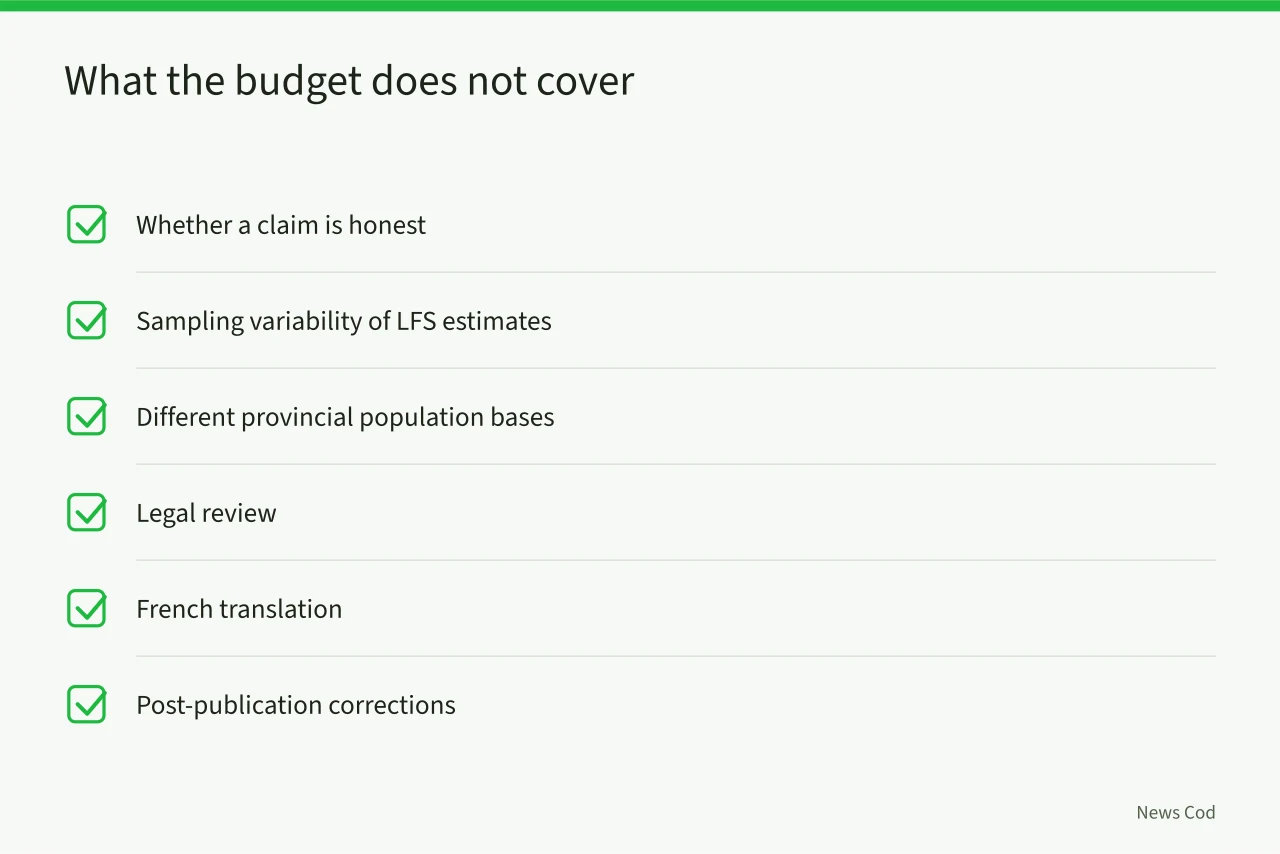
Provincial comparisons are the common trap. Two provinces can publish the same headline rate built on different population bases or different treatment of temporary layoffs. The public document types and statuses compared guide is useful here, because it shows how document status changes what a record actually proves.
Nothing in this budget covers legal review, translation into French, or a correction process after publication. Those sit in a different cost centre.
Where budgets leak
Leaks are almost always time. An unchecked claim can take three hours to unwind once a reader challenges it.
Another leak is duplicate subscriptions. Two people on one desk often buy the same data tier twice.
A third is scope creep. A single provincial figure becomes a ten-province comparison, and the review fee multiplies.
Finally, budgets leak when nobody records the access date. A table revised six weeks later makes an old citation unverifiable, and redoing the work costs the same as the first pass. If a claim crosses the border, the US and Canada border claims breakdown shows where the two countries' figures stop being comparable.
Common questions
Do I need to pay for Statistics Canada data? No. The Labour Force Survey tables and The Daily releases are free. Paid tiers add convenience, not access to the headline numbers.
How much should a small desk budget? Roughly $0 to $400 a year covers a licence, a short course and a couple of freelance reviews. Most of the real cost is staff time.
Why do provincial numbers disagree? Different population bases, different treatment of layoffs and different seasonal adjustment. Confirm the series definition before comparing two provinces.
What is the cheapest first step? Open the survey methodology page and the current The Daily release, then match the claim's wording to the table's reference period.