Guides
Elections Canada vs Provincial Commissions: Where to Verify Campaign Finance Claims
To verify campaign finance claim Canada, use the right database. Federal and provincial filings are searched separately, and errors carry real costs.
What to take away
- Federal campaign finance data lives with Elections Canada; provincial filings live with each province's own commission, and no single search covers both.
- Contribution limits are set in CAD and differ by jurisdiction, so a dollar figure quoted from one province rarely transfers to another.
- The dollar cost of a verification is small, roughly $0 to $60 per query, but the recurring cost is time and the price of being wrong.
- A claim about a donation, a loan or a surplus needs the filing it came from named before you repeat it.
- Where a database holds nothing, the honest answer is that the record is not public yet, not that the donation did not happen.
What the range covers
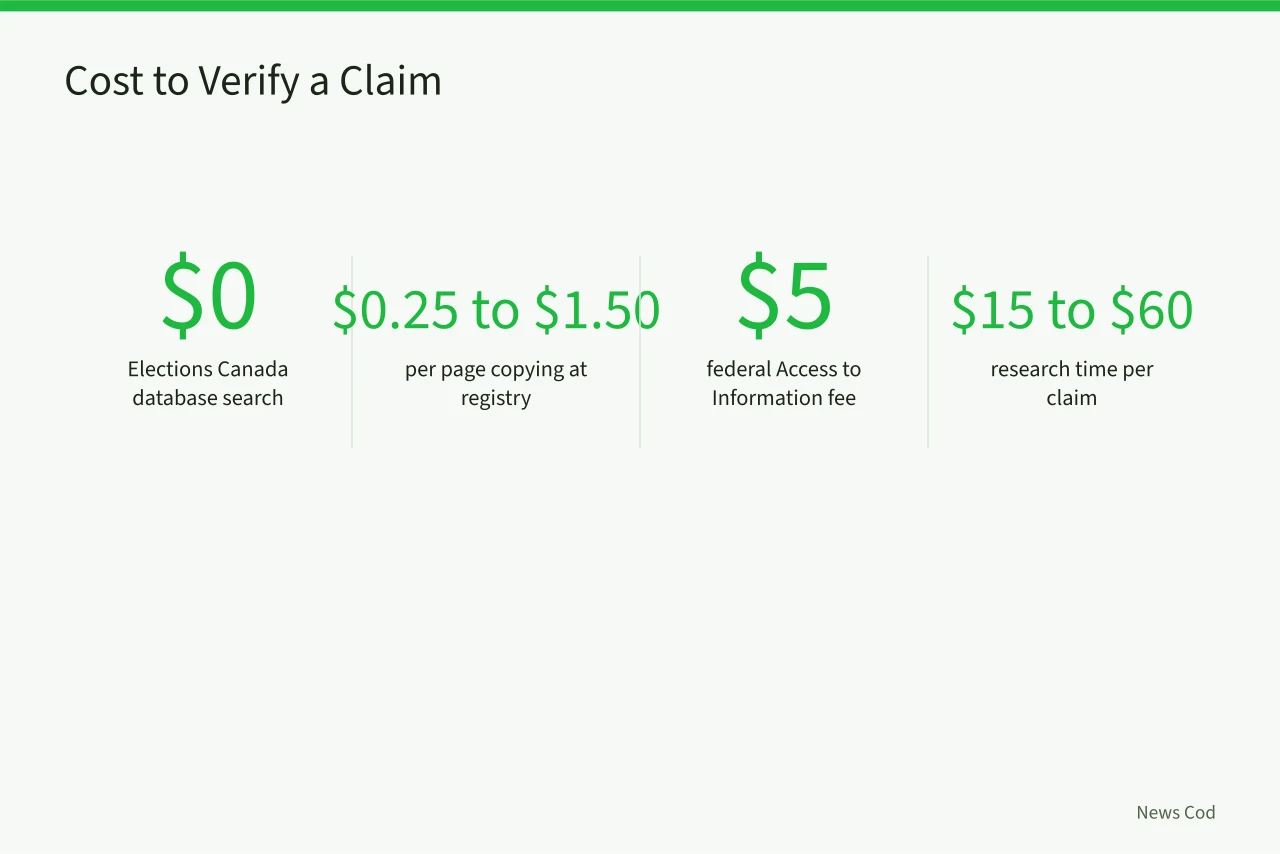
Verifying one campaign finance claim in Canada is cheap in cash and expensive in attention. The cash range runs from nothing to about $60 per claim, labelled illustrative because fees change and most lookups are free.
What that money buys is access, not answers. Elections Canada publishes candidate and party financial returns, while provincial commissions publish their own filings on their own schedules. The two systems do not share a search box.
| Item | One-off or recurring | Cost in CAD |
|---|---|---|
| Elections Canada database search | Recurring | $0 |
| Provincial commission search | Recurring | $0 |
| Copying or printing a return at a registry office | One-off | $0.25 to $1.50 per page |
| Access to Information request for records not posted | One-off | $5 application fee, plus search and preparation charges |
| Records request under a provincial access law | One-off | $0 to $30, varies by province |
| Research time at a desk rate of $30 per hour | Recurring | $15 to $60 per claim |
Line by line
The federal side is the easier half. Elections Canada keeps contribution records and financial returns for registered parties, candidates and third parties, and it publishes them in searchable form after filing deadlines pass.
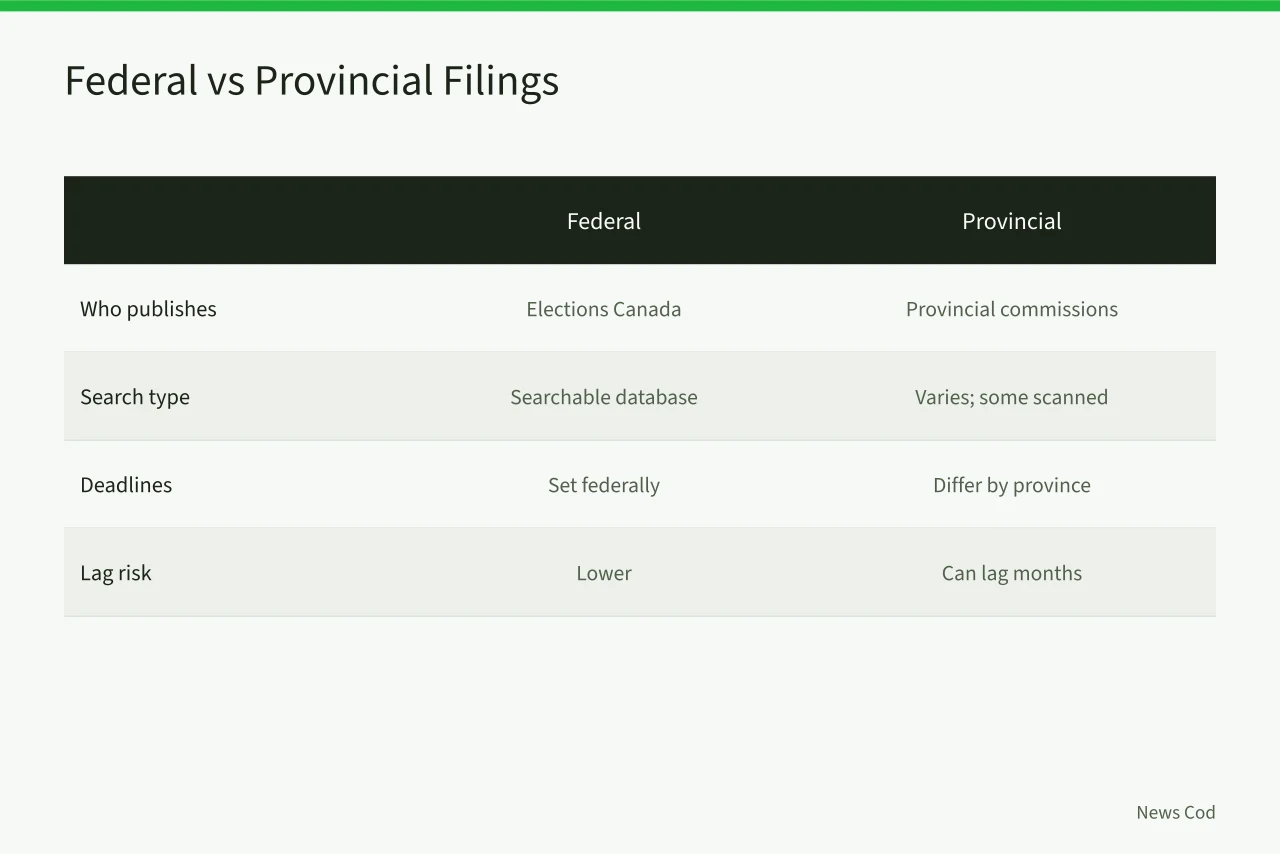
Provincial systems differ in coverage and in search features. Some commissions let you search by donor name; others publish scanned returns you read page by page. Filing deadlines also differ, so a provincial record can lag a federal one by months.
Access to Information is the backstop when a record is not posted. The federal process is described on the Government of Canada's access to information pages, and the governing statute is the Access to Information Act. Federal requests carry a $5 application fee.
Fixed against variable
Fixed costs are the ones you pay whether the search succeeds or not: the application fee, the copying charge, the hour you block off. They are predictable and small.
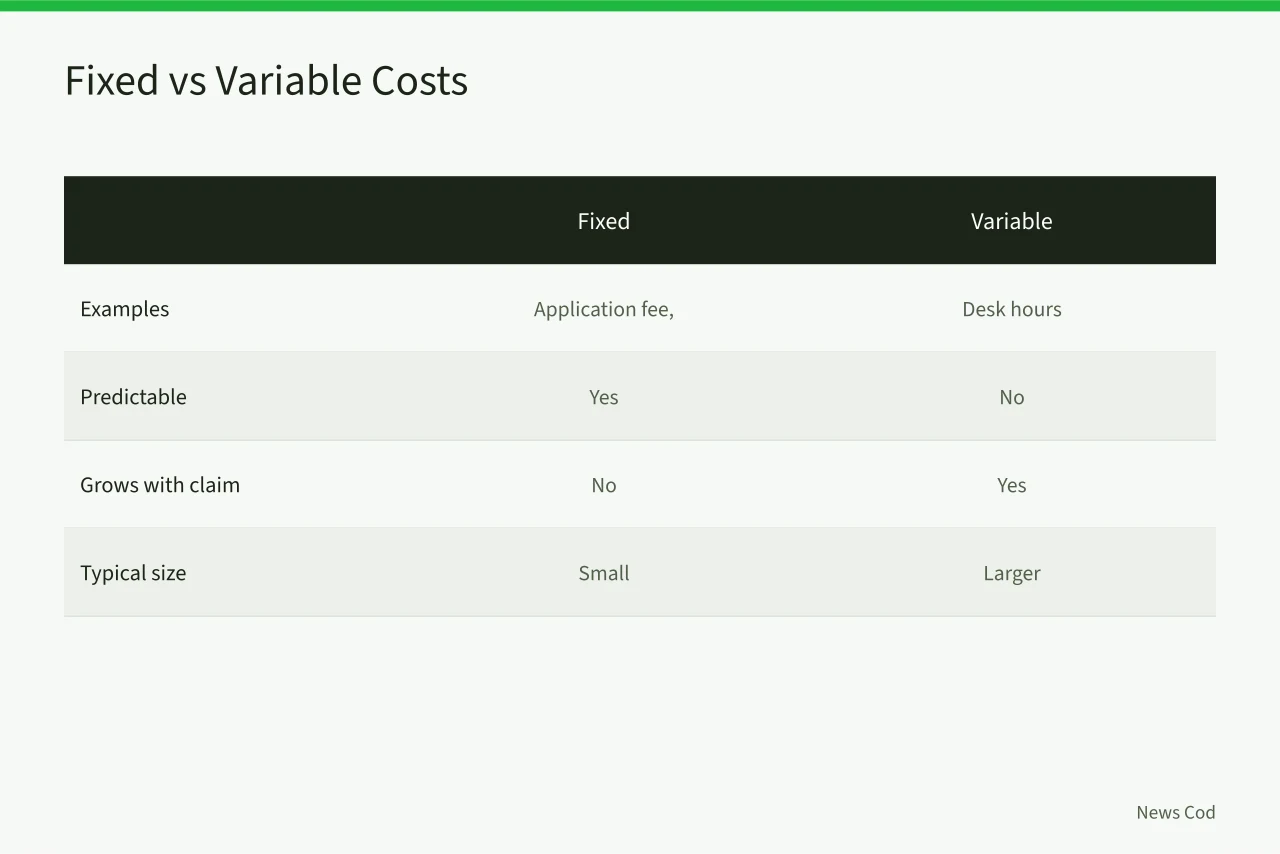
Variable costs are the ones that grow with the claim. A single donor name is a ten minute check. A claim about a loan guarantee routed through three riding associations can take a day, and the desk time is the real bill.
Provincial access fees sit in the same band as federal ones, though each province sets its own. Budget the fee, then budget the hours, and treat the hours as the larger number.
What the tools do not include
No public database shows donations in real time. Filings arrive on a schedule, and a gap between an event and its filing is normal, not evidence of concealment.
Coverage is also uneven. Municipal campaigns, leadership races and nomination contests are governed by separate rules in several provinces, and some of those records are held by the municipality rather than the province.
What the databases do not include is interpretation. A listed contribution is a reported contribution. Whether it broke a limit is a question for the commission, and the answer may take a year.
Where budgets leak
Time leaks first. A reader searches the federal database, finds nothing, and concludes the donation never happened, when the filing was provincial all along.
Money leaks in records requests filed too early. A request sent before a filing deadline produces a nil response and a fee, and the same request sent three months later produces the return.
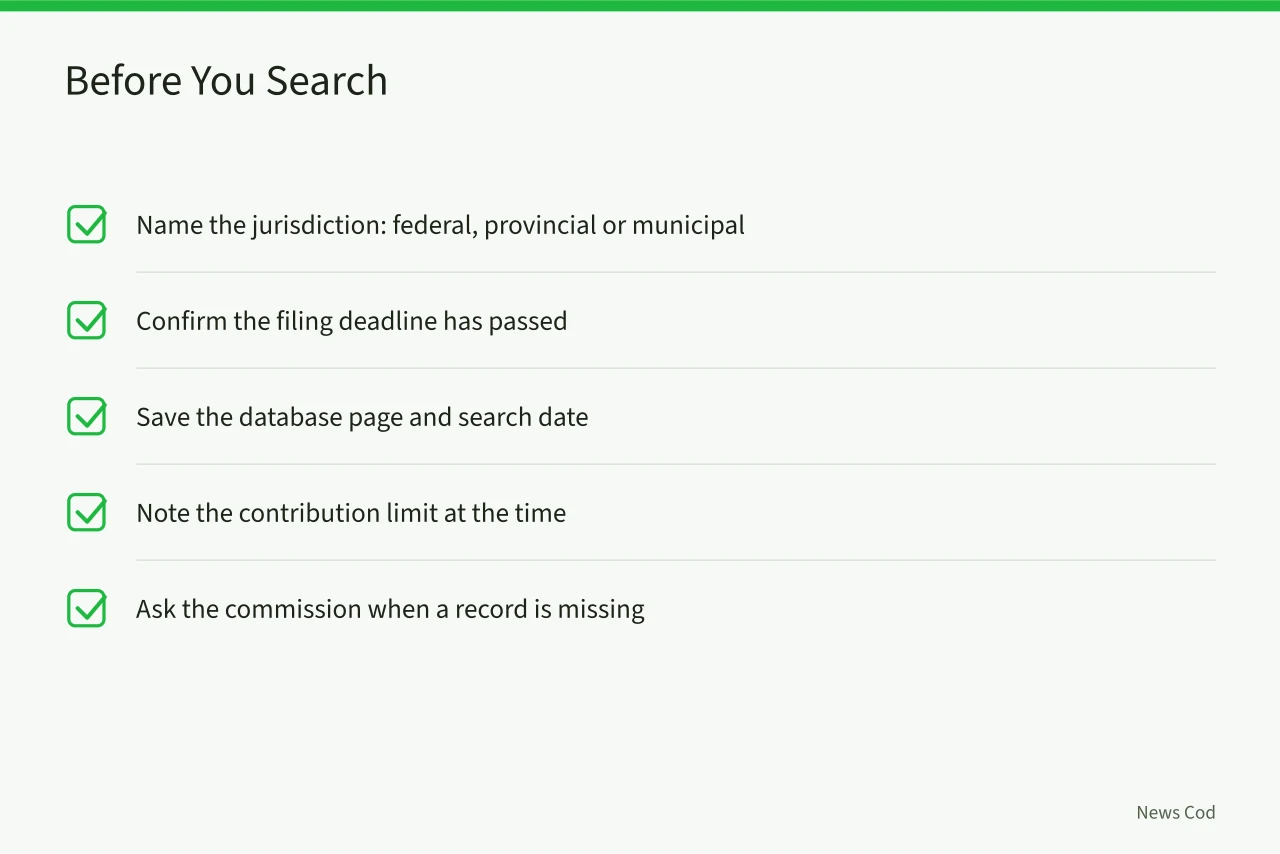
- Name the jurisdiction before you search: federal, provincial or municipal.
- Confirm the filing deadline for that jurisdiction and check whether it has passed.
- Save the exact database page and the date you searched it.
- Note the contribution limit in CAD that applied at the time, not today's limit.
- Ask the commission directly when the record is missing rather than filling the gap yourself.
A missing record is a scheduling fact until a commission says otherwise.
Example
A post claims a sitting MP took a $1,600 donation from a named company. The federal search returns nothing under that name, which looks damning. The company instead gave to a provincial party, whose commission publishes scanned returns.
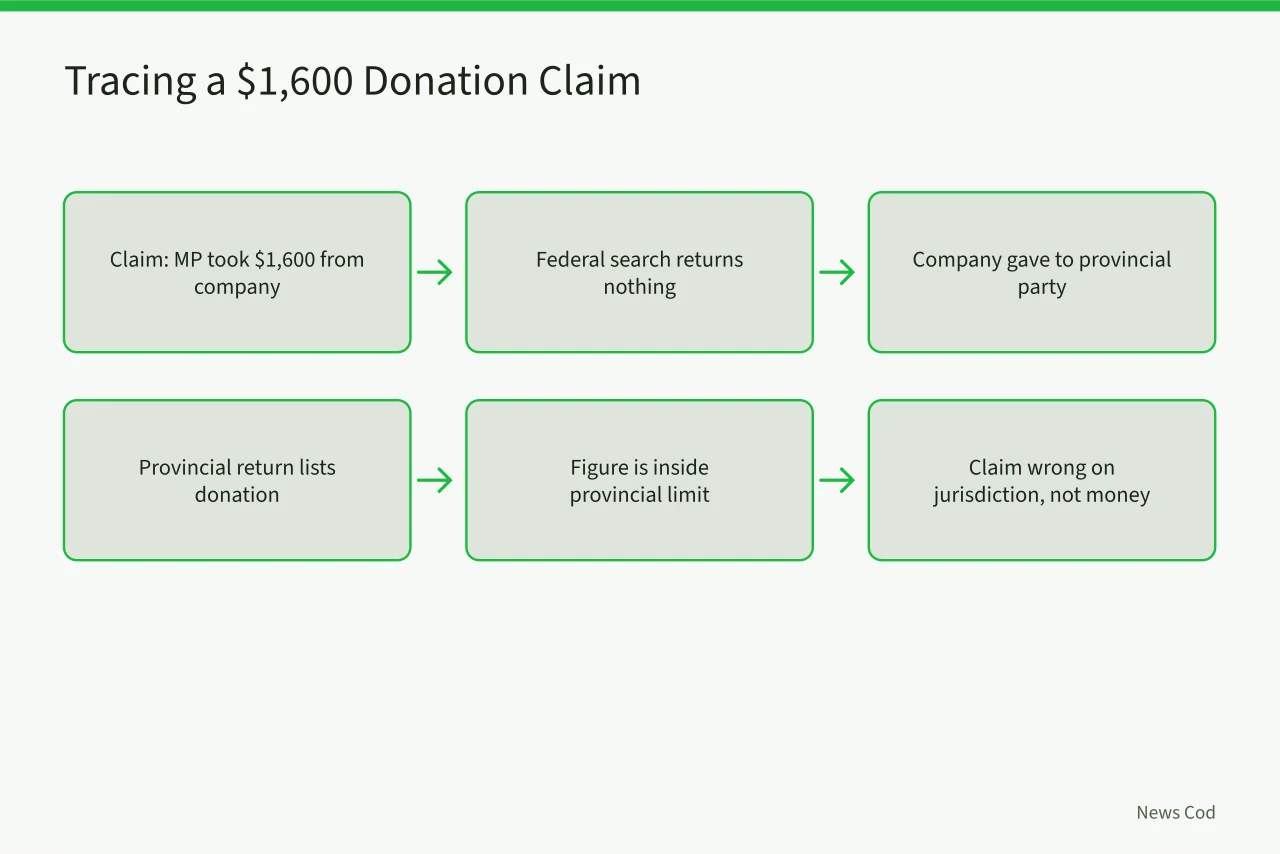
The provincial return lists the donation at a figure inside that province's limit. The claim was wrong about the jurisdiction, not about the money. Two searches, about forty minutes, and a correction that named the right filing.
For the wider pattern of checking documents against their source, the government records guide walks through the same method for non-election records, and the US election claims guide is useful for readers comparing how the two countries publish filings.
Common questions
Is there one Canadian database for all political donations? No. Elections Canada covers federal parties, candidates and third parties. Each province runs its own system, and municipal rules are separate again in most provinces.
How much does a check cost? Most searches are free. Budget roughly $0 to $60 per claim in fees and desk time, with the time being the larger share. Federal Access to Information requests carry a $5 application fee.
Why does a donation not appear? Filing deadlines differ by jurisdiction, and returns are published after review. Check the deadline before concluding anything, and how to request records if the document is not posted.
Do contribution limits match across Canada? No. Each jurisdiction sets its own limit in CAD, and limits change over time, so a figure quoted from one province or year may not apply to the claim in front of you. When a limit is disputed and no commission ruling exists, say that nobody knows yet.