Guides
Student Loan Forgiveness Claims: Check State and Federal Sources First
Student loan forgiveness claims need a quick check of Department of Education announcements, Federal Student Aid data, and state program pages before you share.
What to take away
- Start with Department of Education announcements and Federal Student Aid data before any state program.
- A state loan repayment program may exist, but it often applies only to certain occupations and counties.
- One person with zero budget can verify most forgiveness claims in under an hour using free primary sources.
- If a claim names a dollar figure, match it to the official notice date and the borrower's loan type.
The one-person, zero-budget constraint
This news desk works with one person, no paid databases, and no existing audience to pre-test a claim. In measurable terms, that means $0 for subscription tools, 60 minutes to check one forgiveness claim, and no email list to measure reader reaction. That constraint rules out paying for a commercial legal database that aggregates state loan repayment rules. It also rules out assigning a second reporter to call state agencies while the first reads federal pages. The workaround stops paying when more than five claims arrive in one week, or when a claim involves two or more state programs with conflicting dates. At that point, a solo desk should stop and resource it properly, which we return to below.
Check Department of Education announcements first
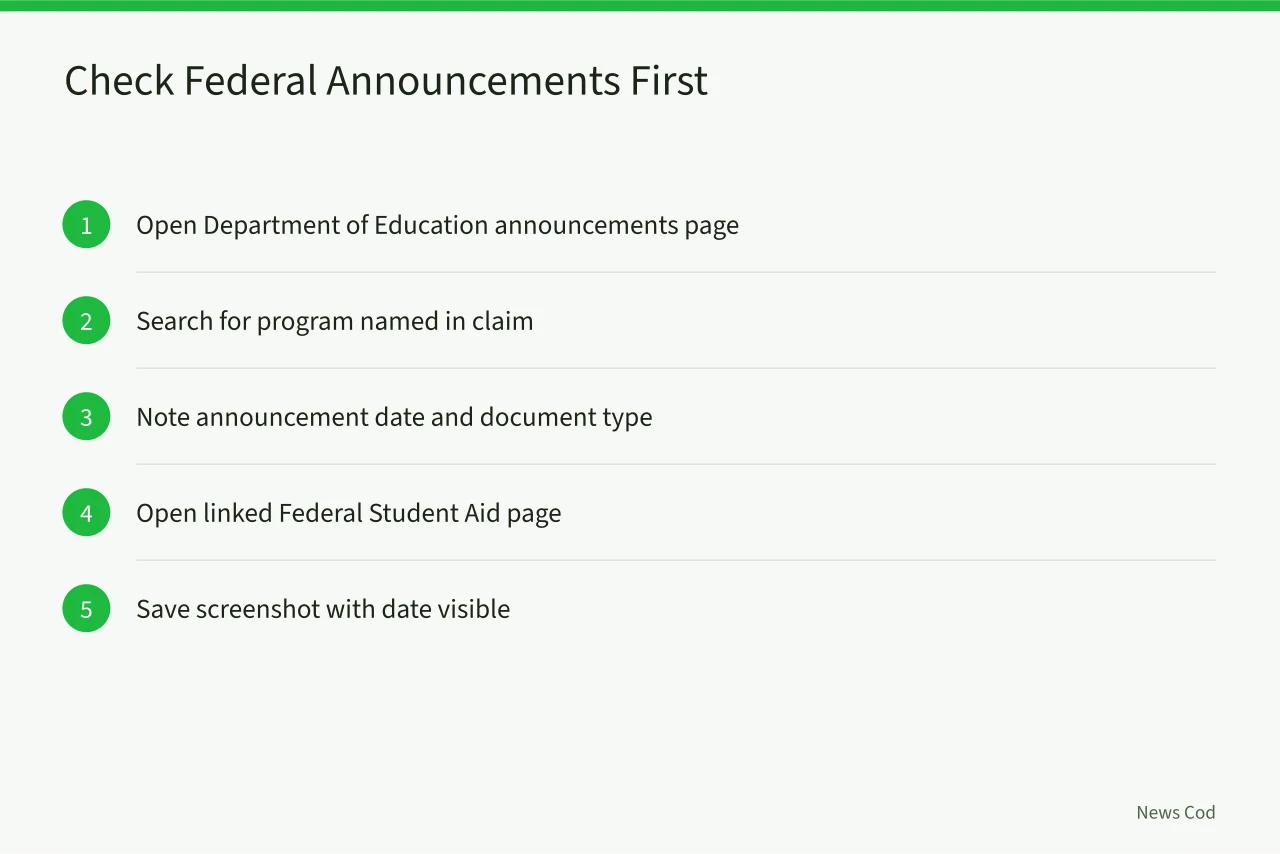
The federal source for loan forgiveness is the Department of Education announcements page, not a viral post. Start there and look for the program name, the date of announcement, and the legal authority cited. If the post claims automatic cancellation for all federal borrowers, compare it against the latest notice. A claim that every borrower gets $10,000 or $20,000 in forgiveness is a common example to check; those dollar figures are illustrative, not current policy. For background on official sources, see the Government records and public documents guide.
Federal Student Aid data: what it can and cannot show
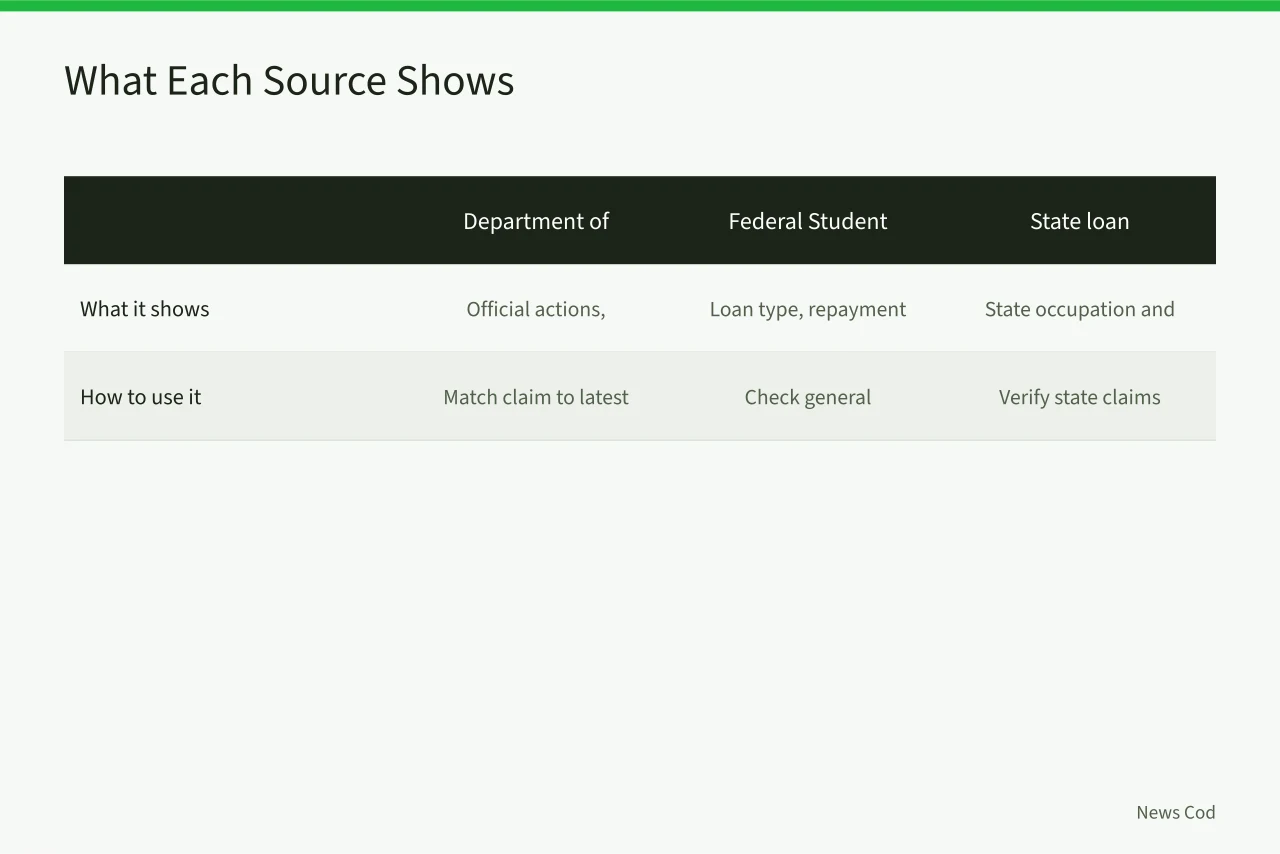
Federal Student Aid data show loan balances, repayment plan status, and eligible program counts, but not individual borrower identities. The Consumer Financial Protection Bureau's student loan resources explain the difference between federal and private loans and how to avoid forgiveness scams. A reporter cannot pull a specific person's balance from this public data because FERPA limits some student records, as the Department of Education's FERPA page explains. That means you can verify aggregate eligibility rules, but not a single borrower's file without signed consent.
If you need the underlying data not posted, know how to find and request public records from the agency.
State loan repayment programs: the slower layer
State programs often exist for health workers, teachers, or rural professionals. They do not mirror federal rules. A claim that says a state will forgive loans for anyone who applies needs a check against the state agency that administers the program. Some states make program rules easy to find; for differences in request rules, see State public records compared. Because this desk has one person, state verification comes only after federal sources are clear. A state office may not answer within the 60-minute window, so note the unanswered call and publish only what the state page shows.
Example: verifying a viral forgiveness claim
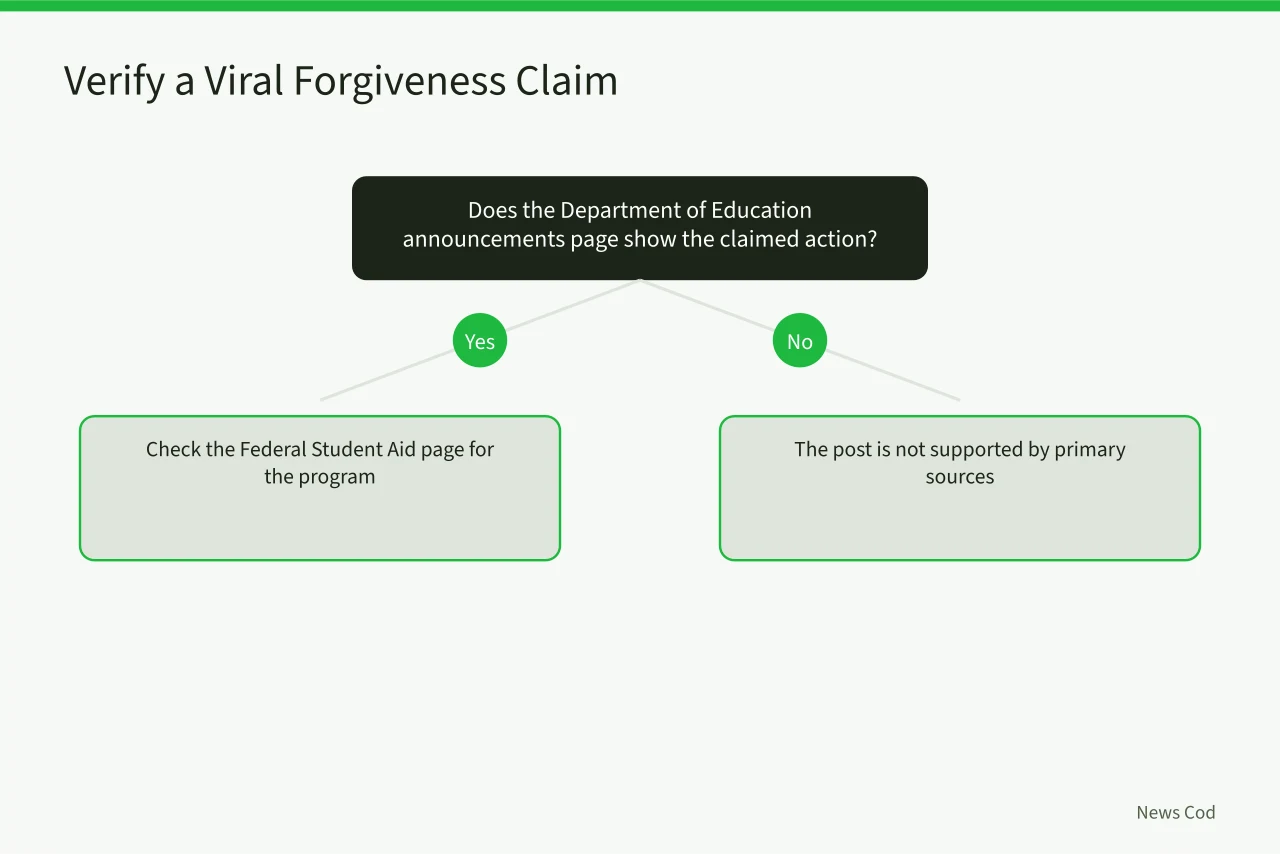
Suppose a post says the Department of Education just announced $20,000 in forgiveness for every borrower with federal loans. The first check is the Department of Education announcements page. The second check is the Federal Student Aid page for the program named. If neither page shows a new $20,000 action, the post is not supported by primary sources. A state page may show a small program for nurses in one county, but that does not match the federal claim. This one-person desk can complete those checks in under an hour using only free pages. The post remains unverified, not false, until an official notice appears.
When to stop and resource it properly
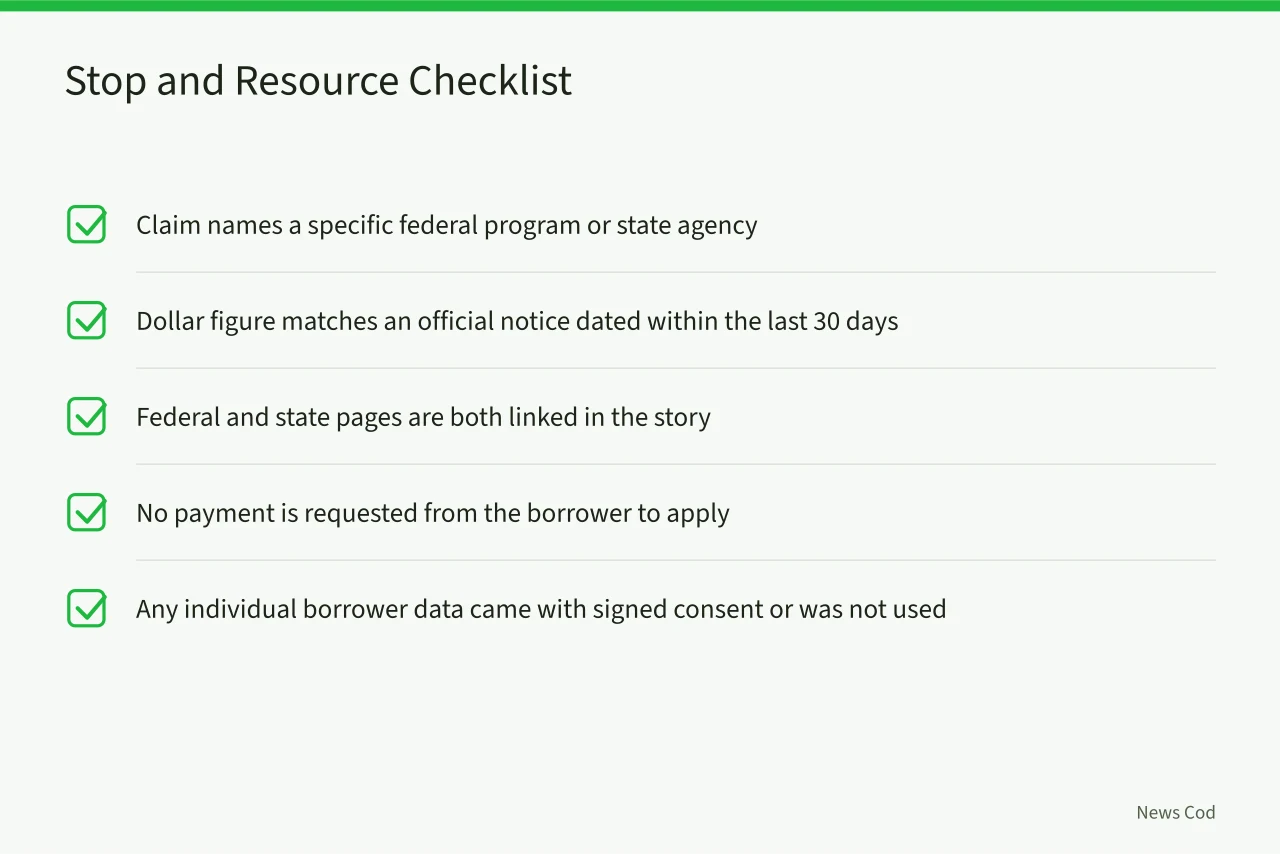
The workaround stops paying in three measurable situations: more than five forgiveness claims arrive in one week, a claim involves two or more state programs with conflicting eligibility dates, or a caller demands verification faster than free web sources allow. At that threshold, stop the solo workflow. Partner with a larger newsroom, use a shared public spreadsheet, or assign a second person to call state offices. For official records, know what counts as a verified document with Public document types and statuses.
Common questions
Where should I start with a student loan forgiveness claim? Start with the Department of Education announcements page, then the Federal Student Aid page for the program named in the claim. State pages come third, because state programs are narrower and slower to verify.
What if the state program page is missing? Treat the claim as unverified unless you can reach the state agency and get a written response. A solo desk should not publish a state program claim based on a screenshot alone.
How can one person verify a claim without paid tools? Use the free federal and state pages, note the date and legal authority, and save screenshots. The 60-minute limit forces you to check only the named source.
When should a single person stop and ask for help? Stop when more than five claims arrive in one week or when two state programs conflict. Then bring in another person or a partner newsroom.